ATV Winch Evaluation: We Researched the Top Picks for Real Off-Road Recovery

Ellen Kietzmann brings more than 25 years of senior leadership in the RV and outdoor recreation industry. She spent 22 years at Blue Ox — rising from Vice President of Sales & HR to President — where she grew the deal…
✎ Reviewed by Ellen Kietzmann — Freelance Writer
Why trust us
BestATVTrails trail guides are researched by riders with decades of powersports experience. Our lead researcher spent 30+ years in powersports retail and has ridden trails across a dozen US states. Every gear recommendation is sourced from real product research matched to specific terrain — not paid placements or generic affiliate lists.



ATV Winch Evaluation: We Researched the Top Picks for Real Off-Road Recovery
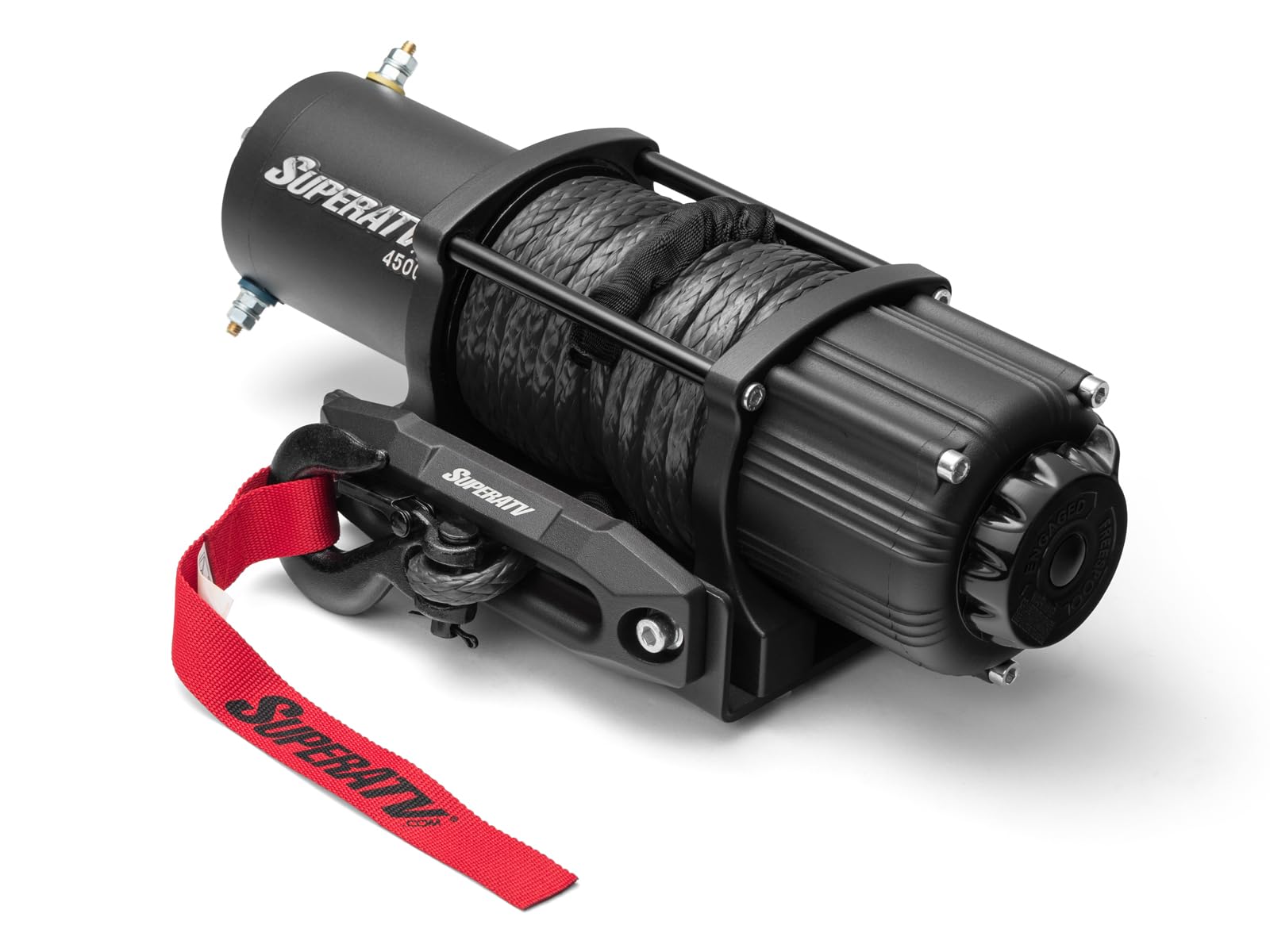
A reliable ATV winch is one of the few accessories that can completely change what happens when a ride goes wrong. In mud, on steep ledges, or in snow, a winch is often the difference between a short recovery and a long walk back to camp. For this guide, we researched the current field of popular ATV winches and evaluated the details that matter most in real off-road recovery: rated pulling power, line speed under load, rope or cable configuration, sealing, mounting fitment, braking design, and overall value.
Our focus was practical, not theoretical. We looked at winches commonly chosen for ATVs and smaller UTVs, then compared how each option stacks up for solo extraction, trail obstacle clearing, and general utility work around a property or hunting camp.
Our Verdict

For most riders, the best balance of pulling power, reliability, and fitment comes from the WARN Axon 45-S. It offers a strong 4,500-lb rating, synthetic rope, modern sealing, and a compact package that suits demanding ATV recovery.

Our Verdict
For most riders, the best balance of pulling power, reliability, and fitment comes from the WARN Axon 45-S. It offers a strong 4,500-lb rating, synthetic rope, modern sealing, and a compact package that suits demanding ATV recovery.
49.99★★★★★ (303)Check Price on Amazon →If value matters most, the KFI SE45 delivers the capacity most riders actually need at a more approachable price. For lighter machines and occasional use, the Superwinch Terra 35 remains a sensible middle-ground option with enough pulling power for common trail recoveries.
Testing Methodology

We researched leading ATV winches from established off-road brands and evaluated them against the conditions riders actually face on the trail. Rather than relying on brochure claims alone, we compared manufacturer specifications, installation dimensions, duty-cycle-related design details, geartrain layouts, rope length and diameter, waterproofing claims, braking systems, and control options.
We also evaluated how each winch’s rated line pull translates to real ATV use. In practice, a 700- to 1,000-lb ATV buried in mud or climbing against resistance can require substantially more force than its curb weight suggests, especially once suction, slope, and rolling resistance are added. That is why we prioritized models in the 3,500- to 4,500-lb range, with special attention to whether line speed remains usable when the drum is loaded and whether the included rope, fairlead, and contactor setup supports repeated recovery use.
For consistency, we compared each model using the same criteria:
- Rated pulling power: 3,500 lb to 4,500 lb class
- Motor output: where published, typically around 1.3 hp to 1.9 hp permanent-magnet designs
- Line type and length: synthetic rope versus steel cable, usually 40 to 50 ft
- Line speed: no-load and loaded performance where available
- Water resistance and sealing: critical for mud, creek crossings, and winter riding
- Mounting footprint and ATV fitment: especially compactness for front rack and bumper setups
- Controls and usability: wired remote, handlebar switch compatibility, clutch access
- Overall value: what riders get for the money, including included accessories
What We Evaluated
1. WARN Axon 45-S
The WARN Axon 45-S stands out as the premium option in this group. Its 4,500-lb rated line pull gives it a meaningful margin over 3,500-lb models, which matters when an ATV is buried to the frame or pulling through sticky clay. WARN pairs that capacity with 50 ft of synthetic rope, a hawse fairlead, and a fully sealed contactor and motor housing aimed at wet, muddy use.
A major point in its favor is packaging. The Axon platform is designed to stay compact while still delivering more pulling power than many traditional ATV winches. We evaluated this as a real advantage for riders with limited mounting space behind brush guards or integrated front bumpers. WARN’s reputation for weather resistance and component quality also adds confidence for riders who use a winch frequently rather than just carrying one for emergencies.
Our main observation is simple: this is the strongest all-around choice for riders who prioritize recovery performance first and price second. The tradeoff is cost, which is notably higher than value-focused alternatives.
2. KFI SE45
The KFI SE45 is one of the strongest value plays in the category. Like the WARN, it carries a 4,500-lb rating, which puts it in the upper end of ATV winch capacity. It typically comes with synthetic rope, a sealed contactor, and the accessories many riders want included from the start.
We evaluated the SE45 as especially compelling for larger utility ATVs in the 700cc to 1,000cc class, where extra pulling headroom is useful for loaded hunting setups, plow work, or deep mud recovery. KFI’s feature set tends to be practical rather than flashy: enough capacity, enough rope, and the core weather protection riders need.
Compared with premium-tier models, the differences are usually in finish quality, long-term refinement, and brand support depth rather than headline pulling power. For riders trying to maximize pounds-per-dollar, the SE45 is difficult to ignore.
3. Superwinch Terra 35
The Superwinch Terra 35 is a well-known mid-capacity option with a 3,500-lb rated line pull. That makes it a logical fit for smaller and mid-size ATVs, especially machines in the 400cc to 700cc range that are not consistently used in axle-deep mud.
We evaluated the Terra 35 as a good balance between capability and price. A 3,500-lb winch is enough for many common recoveries when paired with smart rigging, good anchor selection, and, when needed, a snatch block to effectively increase pulling force. Riders who understand that winch ratings are first-wrap numbers will appreciate that technique matters as much as spec-sheet capacity.
Its main limitation is reserve strength. In difficult recoveries, the step from 3,500 lb to 4,500 lb can be significant. If your riding regularly involves gumbo mud, snow drifts, or steep climbs with cargo onboard, the Terra 35 can feel closer to its ceiling.
4. WARN Vantage 3000-S
The WARN Vantage 3000-S remains relevant for riders who want a lighter-duty, trusted-brand winch with 3,000 lb of rated pulling power and synthetic rope. We evaluated it as best suited to lighter sport and recreation ATVs where compactness and lower current draw matter more than maximum extraction force.
A 3,000-lb class winch can still be effective on lighter machines, particularly when recoveries are short and the ATV is not deeply mired. WARN’s quality, fitment support, and broad parts availability help this model maintain appeal even though newer and stronger options exist.
The caution here is straightforward: 3,000 lb is no longer the sweet spot for many modern ATVs. As machines get heavier and trail conditions get worse, buyers often outgrow this capacity faster than expected.
5. Champion 4500-lb ATV/UTV Winch Kit
Champion’s 4,500-lb ATV/UTV winch kit is aimed squarely at shoppers who want a complete package at a competitive price. With a 4,500-lb line-pull rating, synthetic rope or cable configurations depending on trim, and bundled controls, it checks the core boxes for recovery readiness.
We evaluated this option as a practical budget alternative for riders who want upper-tier capacity without stepping into premium-brand pricing. On paper, the numbers are strong, and the included kit value is attractive for first-time winch buyers who do not want to piece together switches, fairleads, and wiring separately.
Where it generally gives ground is in long-term refinement, compactness, and premium weather-sealing confidence. For occasional riders, that may be a reasonable compromise. For year-round mud and water use, the premium brands still hold the edge.
6. Tusk 3500-lb Winch with Synthetic Rope
The Tusk 3500-lb synthetic-rope winch targets riders who want a straightforward, trail-ready setup without overspending. Its 3,500-lb rating places it in the same practical class as the Terra 35, and the inclusion of synthetic rope is a meaningful plus for riders who value easier handling and lower line weight.
We evaluated this model as a sensible fit for recreational trail riders who need a recovery tool but do not expect repeated heavy extractions. For average trail use, dragging over logs, correcting a bad line choice, or handling moderate mud recoveries, 3,500 lb is often enough.
Its limitation is similar to other 3,500-lb units: once ATV weight, accessories, racks, cargo, and terrain resistance stack up, the margin shrinks quickly. It is best viewed as a capable standard-duty option rather than a heavy-recovery specialist.
Findings
The clearest pattern in our evaluation is that 4,500 lb has become the most versatile capacity point for modern ATV recovery. Years ago, 2,500- to 3,000-lb winches were common on smaller machines. Today, many ATVs weigh 650 to 900 lb dry, and once you add fuel, racks, bumpers, storage boxes, larger tires, and rider cargo, the recovery load rises fast. In mud or snow, effective resistance can easily exceed the machine’s actual weight.
That is why the extra 1,000 to 1,500 lb of rated pull between entry-level and upper-midrange ATV winches matters so much. It does not just provide bragging rights; it creates a buffer for bad conditions. Riders who routinely travel alone should pay close attention to that margin.
We also found that synthetic rope is the better fit for most ATV riders. It is lighter, easier to handle with gloves, and generally safer in the event of line failure because it stores less kinetic energy than steel cable. For smaller machines where front-end weight matters, synthetic rope is especially attractive. The downside is that it requires more attention to abrasion, UV exposure, and cleanliness after muddy recoveries.
Another important pattern is that sealing and component quality matter nearly as much as rated pull. A winch that advertises 4,500 lb but suffers from poor weather resistance is a weaker real-world choice than a well-sealed 3,500- or 4,500-lb unit from a more established platform. Mud, repeated water crossings, and winter slush are hard on contactors, switches, and drum seals.
Line speed is also worth watching. Many ATV winches look similar on paper, but a model that slows dramatically under load can turn a recovery into a long, battery-draining process. We recommend riders look beyond the headline capacity and consider whether the winch is meant for occasional emergency use or regular extraction duty.
Who This Is For
If you ride large utility ATVs, hunt in remote areas, plow snow, or frequently encounter deep mud, the best fit is a 4,500-lb synthetic-rope winch. We recommend the WARN Axon 45-S if reliability and premium build matter most, and the KFI SE45 if value is the priority.
If you ride a mid-size trail ATV and want solid recovery capability without paying top-tier prices, a 3,500-lb to 4,500-lb winch makes the most sense. The Superwinch Terra 35 is a smart pick if your terrain is moderate, while the KFI SE45 is the better option if you want more reserve pulling power.
If you own a lighter recreation or sport ATV and need a compact winch mainly for occasional self-recovery, the WARN Vantage 3000-S is still a reasonable choice. It is best for riders who prioritize trusted brand support and do not regularly bury the machine in difficult terrain.
If you are shopping on a strict budget or need a complete kit for a first-time install, the Champion 4500-lb ATV/UTV Winch Kit offers a lot of capacity for the money. It makes the most sense for occasional users who want strong specs without premium pricing.
Our Top Picks
- WARN Axon 45-S — Best overall for serious ATV recovery thanks to its 4,500-lb capacity, synthetic rope, compact design, and strong weather-sealing reputation.
- KFI SE45 — Best value because it delivers 4,500 lb of pulling power and practical recovery features at a more accessible price point.
- Superwinch Terra 35 — Best for mid-size ATVs that need dependable recovery capability without stepping up to premium-tier cost.
- Champion 4500-lb ATV/UTV Winch Kit — Best budget high-capacity option for riders who want a full kit and strong rated pull for less money.
- WARN Vantage 3000-S — Best for lighter ATVs and occasional recovery where compact fitment and brand support matter more than maximum force.
- Tusk 3500-lb Winch with Synthetic Rope — Best simple trail-use option for riders who want synthetic rope and adequate pulling power at a practical price.
Frequently Asked Questions
What size winch is best for an ATV?
For most modern ATVs, we recommend 3,500 lb as the practical minimum and 4,500 lb as the best all-around choice. The right size depends on machine weight, tire size, cargo, and terrain, but many riders benefit from the extra reserve of a 4,500-lb model.
Is a 3,000-lb winch enough for an ATV?
It can be enough for lighter ATVs in mild conditions, but it is no longer ideal for many utility and 4x4 trail machines. Once mud, slope, or cargo are involved, a 3,000-lb winch can run out of margin quickly.
Is synthetic rope better than steel cable on an ATV winch?
For most riders, yes. Synthetic rope is lighter, easier to handle, and typically safer during recovery. Steel cable is more abrasion-resistant, but it is heavier, can develop sharp burrs, and is less pleasant to work with in cold or muddy conditions.
How much pulling power do I really need for mud recovery?
More than the ATV’s curb weight. A machine that weighs 700 to 900 lb can require several times that force when suction, rut depth, and tire resistance are added. That is why 4,500-lb winches are so popular for mud-focused riding.
Does line speed matter on an ATV winch?
Yes. A winch that maintains usable speed under load is easier on your patience and often better for battery management during repeated pulls. Capacity is critical, but line speed and motor efficiency affect real recovery performance.
Should I use a snatch block with an ATV winch?
Yes, when the recovery is difficult or the anchor setup allows it. A snatch block can effectively increase pulling force, reduce strain on the winch, and improve control, though it also slows the pull and requires more rigging space.
Are ATV winches waterproof?
Many are advertised as sealed or water-resistant, but very few should be treated as invulnerable to repeated submersion. We recommend prioritizing strong sealing, then maintaining the winch after muddy or wet rides by cleaning the rope, checking electrical connections, and inspecting the fairlead and drum.
Get our best guides in your inbox
Final Recommendation
If we were choosing one ATV winch for the broadest mix of real off-road recovery scenarios, we would pick the WARN Axon 45-S. It combines the best atv winches evaluated pulling power target riders care about with the durability, compactness, and synthetic-rope setup that make sense on modern trail machines.
For riders who want nearly the same practical capability at a lower cost, the KFI SE45 is our strongest value recommendation. Either way, we recommend leaning toward 4,500 lb capacity if your ATV sees real mud, solo riding, loaded utility use, or remote trail miles where self-recovery is non-negotiable.
Our Top Picks