Best Hi-Lift Jacks for ATV Off-Road Recovery (2026)

Alana Azzouz is a Senior Editor at Searchshop Media Network with over a decade of experience in consumer content quality and editorial standards. She has reviewed thousands of product guides, buying articles, and comp…
Why trust us
BestATVTrails trail guides are researched by riders with decades of powersports experience. Our lead researcher spent 30+ years in powersports retail and has ridden trails across a dozen US states. Every gear recommendation is sourced from real product research matched to specific terrain — not paid placements or generic affiliate lists.

How We Evaluated
We researched the top options, comparing them across key factors including performance, value, ease of use, and reliability. Our recommendations are based on editorial evaluation of verified specifications, owner-reported real-world performance, and domain expertise.
Best Hi-Lift Jacks for ATV Off-Road Recovery
If you're searching for the best hi lift jack ATV off road recovery setup, the right answer is usually not the tallest jack on the shelf. For ATV riders, we recommend looking at lift range, base stability, handle control, weight, and whether the jack can actually be packed on a rack or in a support rig. We researched the top Amazon-available farm jacks, compact recovery jacks, and ATV-friendly accessories to narrow down the best options for trail use.
A hi-lift jack can be incredibly useful for lifting an ATV out of ruts, resetting a bead, moving a machine sideways, or creating enough clearance to stack traction under a tire. But it can also be one of the most dangerous tools in your recovery kit if you use the wrong size, the wrong base, or poor technique. In this guide, we break down the best picks, what each one is best for, and how to choose a safer, more practical setup for ATV recovery.
All Picks & Comparison

| # | Product | Best For | Price | Rating | ||
|---|---|---|---|---|---|---|
| #1 |  |
Hi-Lift Jack Off-Road Kit ORK Hi-Lift |
— | $101.60 | (763) | Check Price on Amazon → |
| #2 | 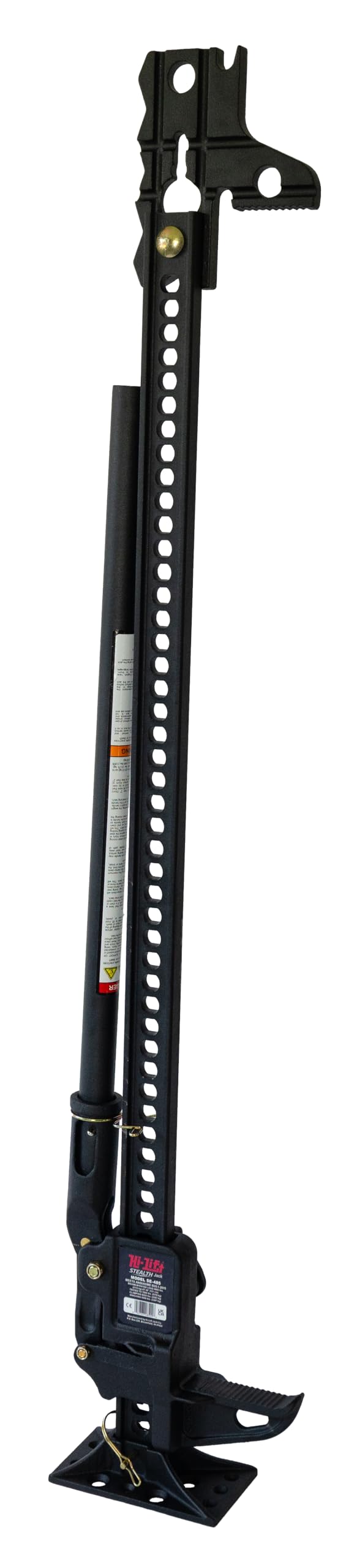 |
Hi-Lift Jack 48" Stealth Jack SE-485 Hi-Lift |
— | $161.90 | (2) | Check Price on Amazon → |
| #3 |  |
Hi-Lift Jack 60" Cast/Steel Jack HL-604 Hi-Lift |
— | $112.32 | (1,624) | Check Price on Amazon → |
| #4 | 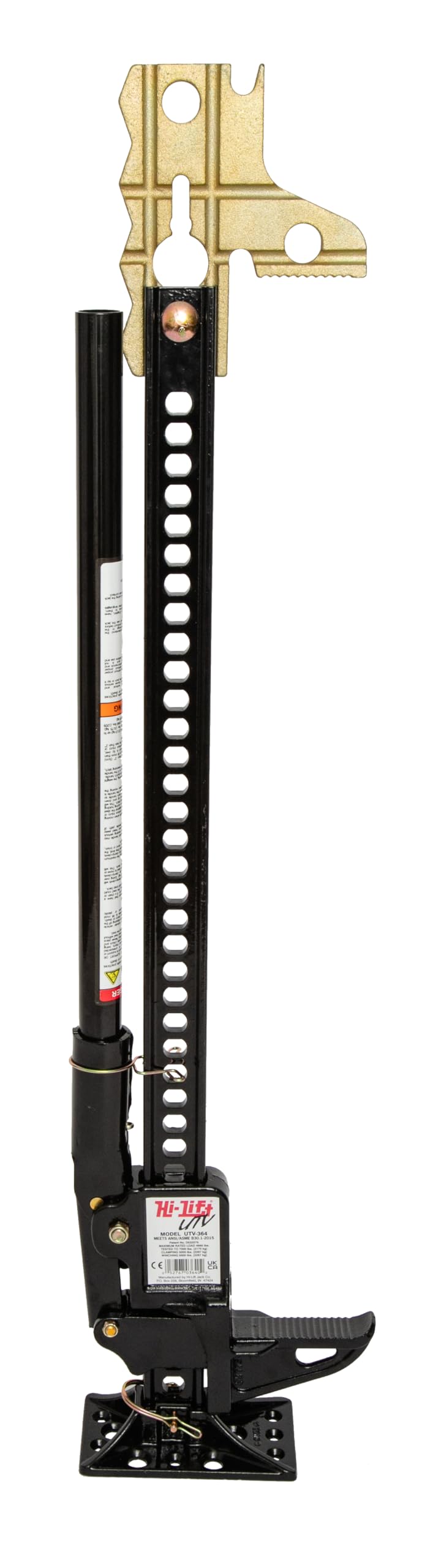 |
Hi-Lift Jack 36" UTV Jack UTV-364 Hi-Lift |
— | $128.99 | (219) | Check Price on Amazon → |
Quick Comparison Table
| Rank | Product | Type | Approx. Price | Best For | Key Advantage |
|---|---|---|---|---|---|
| 1 | Hi-Lift Jack HL-364 36-inch Jack | Traditional hi-lift/farm jack | $110-$150 | Most ATV riders | Strong brand reputation and manageable size |
| 2 | Torin Big Red 48-inch Farm Jack | Budget farm jack | $80-$120 | Value-focused riders | Lower cost for occasional recovery use |
| 3 | VEVOR 33-inch Farm Jack | Compact farm jack | $70-$110 | Smaller machines and tighter storage | Shorter length is easier to transport |
| 4 | Hi-Lift Jack XT-485 X-Treme 48-inch Jack | Premium heavy-duty hi-lift | $160-$230 | Riders with larger UTV/ATV mixed fleets | Better hardware and finish quality |
| 5 | Powerbuilt 3 Ton All-in-One Bottle Jack and Jack Stand | Alternative recovery jack | $70-$100 | Garage, camp, and stable lifts | More controlled vertical lifting on firm ground |
Our Top Picks for ATV Recovery

1. Hi-Lift Jack HL-364 36-inch Jack
For most ATV riders, this is the best overall choice. The Hi-Lift Jack HL-364 gives you the proven design of the original brand in a size that is more realistic for ATV transport than a full 48-inch model. A 36-inch jack still offers enough lift for many trail situations, but it is less awkward to mount, carry, and control.
The main reason we rank it first is practicality. Full-size farm jacks are excellent tools, but many ATV riders simply do not have a clean way to carry a 48-inch jack on the machine. The 36-inch version is more likely to fit front or rear rack mounting solutions, and it is easier to use around smaller vehicles without excessive handle swing.
Pros
- Trusted Hi-Lift build quality
- More manageable size for ATV use
- Strong steel construction
- Useful for lifting, winching, clamping, and spreading with the right accessories
- Better fit for riders who actually carry their recovery gear
Cons
- Still heavy compared with compact jacks
- Requires training and care to use safely
- Base can sink in mud or sand without an accessory plate
- Not ideal for very tall lifts on larger side-by-sides
Who It's For
We recommend this model for most solo ATV riders, trail explorers, and backcountry riders who want a real hi-lift jack without committing to the bulk of a 48-inch unit. If your machine has rack space and you ride in mud, rocks, or uneven terrain, this is the sweet spot.
2. Torin Big Red 48-inch Farm Jack
The Torin Big Red 48-inch Farm Jack is the budget-friendly pick for riders who want farm-jack capability without paying premium-brand pricing. It is a common Amazon option and appeals to riders building a recovery kit on a tighter budget.
A 48-inch jack gives plenty of lift range, which can be useful if you also recover small trailers, larger ATVs with lift kits, or even a UTV in your group. The tradeoff is portability. For ATV-only use, 48 inches can feel oversized, but if you support multiple off-road vehicles, the extra height may be worth it.
Pros
- Affordable compared with premium Hi-Lift models
- Long lift range for varied recovery needs
- Widely available and easy to source
- Good entry point for occasional use
Cons
- Bulkier than most ATV riders need
- Quality consistency is not as confidence-inspiring as Hi-Lift brand models
- Heavier and harder to pack on smaller machines
- May need extra inspection and maintenance before regular trail use
Who It's For
This is best for budget-conscious riders, hunters, landowners, or camp crews who want one jack for ATV work, trailer tasks, and occasional off-road recovery. We recommend it more for riders who transport gear in a truck or trailer than those who want everything mounted directly on the ATV.
3. VEVOR 33-inch Farm Jack
The VEVOR 33-inch Farm Jack is a compact option that makes more sense than many full-length jacks for smaller ATV platforms. If your biggest concern is storage, this shorter design is appealing.
While VEVOR is not as iconic in the recovery world as Hi-Lift, the 33-inch format is genuinely useful for ATV riders. On a machine with limited rack space, every inch matters. A compact farm jack can still lift a wheel high enough to place rocks, boards, traction mats, or branches underneath, which is often all you need to get moving again.
Pros
- Compact size is easier to transport
- Lower price point
- Better fit for smaller ATVs and limited rack space
- Useful for basic off-road lifting tasks
Cons
- Less total lift height than 36-inch and 48-inch models
- Brand reputation is not as established as Hi-Lift
- Not the best option for larger mixed-fleet recovery needs
- Finish and long-term durability may vary
Who It's For
We recommend this for riders with smaller sport-utility ATVs, lighter trail kits, or anyone who knows a 48-inch farm jack is simply too big to carry realistically. If portability matters more than maximum reach, this is a practical pick.
4. Hi-Lift Jack XT-485 X-Treme 48-inch Jack
The Hi-Lift Jack XT-485 X-Treme 48-inch Jack is the premium choice in this guide. It uses the same core concept as the classic Hi-Lift but adds upgraded hardware, a powder-coated finish, and enhanced durability features.
For pure ATV use, we think this model is overkill for many riders. But if your garage includes both ATVs and UTVs, or you routinely ride in groups where one tool needs to handle multiple machine sizes, the XT-485 earns its place. It is a serious recovery jack for riders who want top-tier construction and are willing to pay for it.
Pros
- Premium Hi-Lift construction
- Excellent durability and corrosion resistance
- Long lift range for larger machines
- Better hardware and finish than basic models
- Strong choice for demanding recovery kits
Cons
- Expensive
- Large and heavy for ATV-only packing
- More jack than many riders need
- Requires careful mounting and storage planning
Who It's For
This is for experienced off-road riders, ranch users, and mixed ATV/UTV owners who want one premium jack for broad recovery use. We recommend it when durability and versatility matter more than compactness.
5. Powerbuilt 3 Ton All-in-One Bottle Jack and Jack Stand
This is the wildcard pick. The Powerbuilt 3 Ton All-in-One Bottle Jack and Jack Stand is not a hi-lift jack, but it deserves consideration because many ATV riders are better served by a more stable vertical lifting tool, especially for maintenance, camp repairs, and flatter recovery situations.
On firm ground, a bottle jack-style unit can feel more controlled and less dramatic than a farm jack. It is not as versatile for pulling, clamping, or lifting from awkward points, but it can be the safer choice for riders who mainly need to raise a wheel for tire work or underbody access.
Pros
- More stable on hard, flat surfaces
- Easier for many riders to use confidently
- Combines jack and stand function
- Great for garage, trailer, and campsite service
Cons
- Not a true hi-lift recovery jack
- Poor choice for deep mud, ruts, or very uneven terrain
- Requires good access under the ATV
- Less versatile than a farm jack in off-road extraction
Who It's For
We recommend this for riders who split time between trail riding and maintenance, and for those who want a safer-feeling lifting tool for controlled situations. It is especially useful as a support jack in a truck or trailer, alongside a winch and traction boards.
How to Choose the Best Hi-Lift Jack for ATV Off-Road Recovery
Not every jack marketed for off-road use is a smart buy for ATV riders. Here are the factors we think matter most.
1. Length and Packability
For ATVs, 33-inch to 36-inch models are usually the most realistic. A 48-inch jack offers more range, but it is much harder to mount securely. Before buying, measure your front rack, rear rack, or support trailer setup.
2. Base Stability
A hi-lift jack on soft dirt, sand, or mud can sink quickly. We strongly recommend pairing any farm jack with a jack base plate or wide support platform. This is not optional in many trail conditions.
3. Rated Capacity
Most farm jacks have plenty of capacity for an ATV, but the rating alone does not tell the whole story. What matters more is whether the jack can lift from a safe point without slipping. Always verify your machine's lift points before heading out.
4. Corrosion Resistance
ATV riders deal with mud, water crossings, and long storage periods. Powder-coated finishes and rust-resistant hardware matter more than many buyers realize.
5. Handle Control and Mechanism Quality
Cheap farm jacks can work, but rougher climbing mechanisms and lower-quality pins can make operation less smooth. On a tool that stores a lot of force, that matters.
Essential Accessories for Safer ATV Jack Recovery
A hi-lift jack is only part of the system. We recommend building a small recovery package around it.
Jack Base Plate
A wide base plate helps prevent sinking in mud, sand, or soft forest floor. Many riders overlook this until the first time the jack disappears into the ground.
Wheel Lift or Lift Mate Strap
Because ATV bumpers and racks vary, a lift strap or wheel hook can create a safer lift point than trying to improvise on plastic bodywork or weak tubing.
Recovery Gloves
A farm jack handle, chain, and muddy steel parts can pinch, scrape, and slip. Good gloves are basic safety gear.
Traction Boards
Often, the jack only needs to raise the tire enough for you to place traction under it. This is faster and safer than trying to create a huge lift.
Winch Backup
If your ATV already has a WARN, SuperATV, or similar winch, think of the jack as a secondary recovery tool. In many situations, a winch plus traction aid is the better first move.
Basic ATV Hi-Lift Recovery Steps
Using a hi-lift jack on the trail requires caution. We do not recommend improvising if you have never practiced at home on stable ground.
Gear/Materials List
- Hi-lift or farm jack
- Base plate
- Gloves
- Wheel chocks or rocks for stabilization
- Recovery strap or wheel lift attachment if needed
- Traction boards, wood blocks, or rocks to build under the tire
Safety Notes
- Never put any part of your body under an ATV supported only by a hi-lift jack.
- Keep bystanders clear of the handle swing path.
- Use the flattest ground possible.
- Chock the opposite wheels before lifting.
- Stop immediately if the jack leans, shifts, or starts sinking.
Numbered Steps
- Assess the situation. Decide whether a winch, tow strap, or traction board would solve the problem more safely than a jack.
- Stabilize the ATV. Put the transmission in park or gear, set the brake if possible, and chock wheels that will stay on the ground.
- Place the base. Set the jack on a wide base plate or firm support surface.
- Choose a safe lift point. Use a strong frame point, approved bumper area, or a wheel lift attachment. Avoid plastic racks and weak guards.
- Lift slowly. Keep your face and body clear of the handle. Raise only as much as needed.
- Build support under the tire. Add traction boards, rocks, or wood to reduce how far the tire must climb.
- Lower carefully. Reverse the mechanism with full control of the handle.
- Drive out slowly. Once the tire has support, ease out of the rut rather than spinning aggressively.
When a Hi-Lift Jack Is the Wrong Tool
A lot of riders buy a farm jack because it looks like essential overland gear, then rarely use it. For ATV-specific recovery, there are times when another tool is smarter.
- If your machine is buried in deep mud, a winch is often safer and faster.
- If you only need tire service, a compact bottle jack may be easier.
- If you ride alone on narrow trails, a smaller compact jack plus traction boards may be more practical than a full farm jack.
- If you cannot mount the jack securely, do not carry it loosely. That creates a new hazard.
Our Final Recommendation
If we had to choose one product for the widest range of ATV riders, we would go with the Hi-Lift Jack HL-364 36-inch Jack. It balances lift capability, portability, and brand trust better than the oversized 48-inch options.
If value matters most, the Torin Big Red 48-inch Farm Jack is a reasonable budget option, especially for riders carrying gear in a trailer or truck. If compactness is your top priority, the VEVOR 33-inch Farm Jack is the most ATV-friendly size in this roundup.
For premium buyers with larger mixed fleets, the Hi-Lift XT-485 X-Treme is the strongest long-term investment. And for riders who mainly need stable vertical lifting rather than full recovery versatility, the Powerbuilt 3 Ton All-in-One is a smart alternative.
FAQ
What is the best hi-lift jack size for an ATV?
For most ATV riders, we recommend a 33-inch to 36-inch jack. It is easier to carry and still provides enough lift for common trail recovery situations.
Are hi-lift jacks safe for ATV recovery?
They can be safe when used correctly, but they require care. A hi-lift jack can shift, sink, or kick back if used improperly, so a base plate, gloves, wheel chocks, and proper lift points are essential.
Can we use a 48-inch farm jack on an ATV?
Yes, but it is often larger and heavier than necessary. A 48-inch jack makes more sense if you also recover UTVs, trailers, or larger off-road vehicles.
Is a bottle jack better than a hi-lift jack for ATVs?
It depends on the situation. A bottle jack is usually better on firm, level ground for maintenance or tire changes. A hi-lift jack is more versatile for awkward off-road recovery situations.
What accessories should we buy with a hi-lift jack for ATV use?
We recommend a base plate, gloves, a lift strap or wheel attachment, wheel chocks, and traction boards. Those accessories make the jack much more useful and safer on the trail.
Get our best guides in your inbox