Glamis Sand Dunes ATV Guide

Ellen Kietzmann brings more than 25 years of senior leadership in the RV and outdoor recreation industry. She spent 22 years at Blue Ox — rising from Vice President of Sales & HR to President — where she grew the deal…
Why trust us
BestATVTrails trail guides are researched by riders with decades of powersports experience. Our lead researcher spent 30+ years in powersports retail and has ridden trails across a dozen US states. Every gear recommendation is sourced from real product research matched to specific terrain — not paid placements or generic affiliate lists.

Glamis Sand Dunes ATV Guide
Gear for This Trail

For Glamis, we recommend gear that specifically addresses sand, heat, visibility, and high-speed exposure. The products below are real, widely available options that match the demands of this dune system.
| Gear Type | Brand | Product | Why It Suits Glamis | Approx. Price |
|---|---|---|---|---|
| Helmet | Bell | Qualifier DLX MIPS Helmet | A full-face helmet makes sense for high-speed dune riding, blowing sand, and cold desert mornings. The MIPS design adds impact management, and the face shield helps with roost and dust when traffic is heavy near popular hills. | $230-$320 |
| Protective Gear | Alpinestars | Bionic Action Chest Protector | Glamis speeds can get high fast, and chest/back coverage is smart when riding steep transitions or crowded holiday weekends. This model is lightweight and ventilated enough for desert use. | $140-$190 |
| Gloves | Fox Racing | Dirtpaw Gloves | Sand riding means constant bar input and lots of vibration. These gloves offer solid grip, basic knuckle protection, and enough durability for repeated dune sessions without being overly bulky in hot weather. | $25-$40 |
| Terrain-Specific Item | CST | Sandblast Paddle Tire | This is the most trail-specific upgrade on the list. Paddle tires dramatically improve flotation and drive in Glamis sand, especially on climbs and in soft bowls. For many ATVs here, they are close to essential. | $120-$220 per tire |
| Navigation / Safety | Garmin | Tread Powersport GPS | Open dunes can be disorienting, especially after dark or in low-contrast light. A dedicated powersports GPS helps with camp return, route tracking, and location awareness across a huge unmarked riding area. | $500-$800 |
| Comfort / Utility | CamelBak | M.U.L.E. Hydration Pack | Hydration is non-negotiable at Glamis. A quality hydration pack keeps water on your back, leaves your hands free, and makes it easier to sip regularly instead of waiting until you are already overheated. | $100-$140 |
If you ride a utility ATV and regularly recover other machines from soft spots near camp, a recovery strap is also worth packing. We recommend a simple, quality tow strap from a known off-road brand, but if we had to prioritize only one terrain-specific purchase for Glamis, it would be paddle tires first.
Introduction
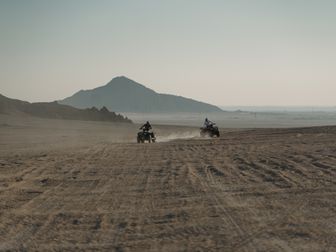
A Glamis sand dunes ATV trip is unlike almost anything else in American off-roading. The Imperial Sand Dunes Recreation Area in southeastern California delivers huge open bowls, long sandy climbs, razorbacks, technical transitions, and wide-open high-speed terrain that draws riders from across the West. When people talk about riding “Glamis,” they usually mean one of the biggest and most famous dune systems in the country, where you can spend a full day carving lines through constantly shifting sand and still not see it all.
Riders visit Glamis for the scale, the freedom, and the challenge. This is not a wooded trail network with marked single routes and mild grades. It is a sprawling dune playground where terrain changes by the hour and where setup matters just as much as skill. Paddle tires are practically essential, horsepower helps, and heat management can make or break a trip. Add in major gathering spots like Gecko Road, Oldsmobile Hill, and Gordon’s Well, and it is easy to see why holiday weekends here have become legendary. We researched this guide for riders who want to plan smarter, ride safer, and bring the right gear for one of the most demanding ATV destinations in the Southwest.
Trail Overview

Glamis is part of the Imperial Sand Dunes Recreation Area (ISDRA), managed by the Bureau of Land Management. It stretches roughly 40 miles long and about 5 miles wide, creating a massive ride area rather than a conventional trail system.
- Location: Imperial County, California
- Nearest towns: Brawley, CA; Holtville, CA; Niland, CA; Yuma, AZ is also a common supply stop
- Total ride area: Roughly 118,000 to 160,000 acres are commonly cited for the broader recreation area; riders typically reference about 40 miles of dune field
- Difficulty range: Green to Double-Black depending on where and how you ride
- Elevation: Approximately sea level to around 500 feet in most commonly ridden zones
- Permit required: Yes, BLM recreation permit required in fee areas
- OHV registration: California green/red sticker or out-of-state OHV registration generally required for motorized vehicles; street-legal requirements apply if used on open roads
- Best season: Late fall through early spring, especially November through March
- Why riders go: Massive open dunes, high-speed sand riding, iconic hill climbs, social camping, and huge riding variety
Popular riding zones and access areas include:
- Glamis / Gecko Road
- Gordon’s Well
- Buttercup Valley
- Ogilby / American Girl area access points
- Oldsmobile Hill
- Competition Hill
Because this is an open dune system, mileage is hard to define the way it would be on a forest trail map. Most riders measure a day here by fuel stops, camp loops, and major landmarks rather than exact trail miles.
Trail Conditions & Terrain
Glamis is pure sand riding, and not the easy flat kind. Expect deep, loose, constantly shifting dune sand with everything from smooth rollers to steep faces and sharp ridgelines. The terrain is open, but that does not mean it is simple. In fact, the lack of fixed routes often makes Glamis more technical than a marked trail network.
The main surface is soft dune sand that changes with wind, traffic, and weather. A line that felt clean in the morning can be chopped up by afternoon. Wind can reshape crests and bowls quickly, which means visibility over the top of a dune should never be assumed. Razorbacks, drop-offs, and blind approaches are the biggest hazards here.
You will encounter:
- Long dune climbs that reward momentum and proper tire setup
- Steep descents where braking too hard can bury the front end
- Wide bowls that invite carving and sidehilling
- Sharp ridges and crests with limited sightlines
- Chopped-up whooped transitions near popular camp access routes
- Heavy traffic zones on weekends and holidays
- Hardpack access roads near staging and camp areas
There are no creek crossings, mud holes, or rocky ledges in the typical Glamis experience, but that does not make it easy. Sand creates its own set of demands. Machines run hotter, fuel range drops, and traction depends heavily on tire choice and throttle control. A standard all-terrain tire can work in limited situations, but for most sport and utility ATVs, paddle tires make a major difference in flotation, forward drive, and control on climbs.
Heat is another defining condition. Even outside peak summer, daytime temperatures can be intense. During warmer months, this area can become dangerously hot, with vehicle cooling systems and rider hydration pushed to the limit. Sand also reflects sunlight, adding to fatigue.
Holiday weekends bring a different kind of condition: crowds. Thanksgiving, Christmas/New Year’s, Presidents’ Day, and major off-road weekends can turn popular zones into high-traffic areas with lots of cross-traffic, parked groups, and inexperienced riders mixing with very fast ones.
Difficulty & Who It's For
We rate Glamis as a full-spectrum riding area: Green to Double-Black, depending on the section and your riding style.
Green: Beginner-friendly flats and low-angle dunes
Beginners can find manageable terrain near camp access areas, lower-angle rollers, and open flats where speeds stay moderate. This suits newer ATV riders who want to learn sand basics like momentum, body position, and smooth throttle control.
Blue: Intermediate dune riding
Most casual Glamis riders will spend time in Blue-level terrain. That includes moderate climbs, bowl riding, linking dune lines, and navigating changing sand without fixed trail markers. This is ideal for riders with some off-road experience who are comfortable standing, shifting body weight, and reading terrain ahead.
Black: Advanced high-speed and steep-face riding
Black-level riding includes taller climbs, aggressive sidehilling, sharper transitions, and faster route selection through busier dune sections. Riders should already understand how sand affects braking, turning, and machine cooling. This is where setup errors and poor line choices become expensive.
Double-Black: Expert-only terrain and conditions
Double-Black at Glamis is less about one named obstacle and more about the combination of factors: blind crests, extreme traffic, very steep faces, night riding, and high-speed dune-to-dune navigation. This level suits experienced dune riders with strong machine control and the judgment to back off when conditions get sketchy.
Bottom line: Beginners can enjoy Glamis, but only if they stay conservative, ride with experienced partners, and treat it as a place to learn gradually. Advanced riders will get the most out of the big bowls, steep climbs, and open terrain.
Permits & Access
Most Glamis riders enter through BLM-managed access and staging areas in the Imperial Sand Dunes Recreation Area. Common access routes include Highway 78, Gecko Road, and Gordon’s Well approaches.
Permit requirements
A BLM Imperial Sand Dunes Recreation Area permit is required in designated fee areas. Permit structures can change, but riders typically see options such as:
- 7-day permit: commonly around $35
- Season permit: commonly around $150
We recommend checking the official BLM Imperial Sand Dunes page before your trip for current pricing, validity dates, and purchase options.
Parking and staging
There are many dispersed camping and staging opportunities throughout the recreation area. Large RV and toy hauler camping is common, especially near:
- Gecko Road
- Gordon’s Well
- Buttercup
- Osborne Overlook area
Parking is generally tied to your chosen camp or staging zone rather than a single centralized trailhead lot. On major weekends, arrive early because the most popular camping corridors fill quickly.
Reservation requirements
In general, standard dispersed dune camping does not work like a reserved campground. Most riders claim open space on arrival where allowed. That said, event weekends and private group gatherings can make some areas feel full well before peak dates, so planning ahead matters even without a formal reservation system.
OHV registration and flags
For ATVs, you should expect to need:
- A valid California OHV sticker or valid out-of-state OHV registration, where recognized
- A whip flag mounted to the vehicle for dune visibility; while riders often discuss this as essential practice, always verify current local requirements and height guidance before arrival
- Spark arrestor and sound compliance where applicable
If you are bringing an out-of-state machine, it is smart to verify both California OHV reciprocity rules and any current BLM access requirements before the trip.
Tips for Riding This System
Run paddle tires if possible. We strongly recommend paddles for rear traction in Glamis. They improve climbing, reduce bogging, and make the whole machine feel more predictable in soft sand.
Never crest a dune at full speed without reading it first. Blind ridges are one of the biggest hazards here. Another rider, a broken machine, or a sharp drop can be sitting right on the other side.
Ride early and late in warmer months. Midday desert heat can become dangerous fast. Cooler morning and evening sessions are easier on both riders and machines.
Carry more water than you think you need. Sand, sun, and wind dry you out quickly. A hydration pack plus extra water back at camp is the smart setup.
Watch holiday crowd patterns. Popular hills and camp-adjacent bowls can become chaotic during Thanksgiving, New Year’s, and Presidents’ Day weekends. If you want more open riding, move away from the busiest social zones.
Check your cooling system and air filter often. Deep sand loads the engine hard, and dusty camp approaches can clog filters faster than many riders expect.
Use landmarks and GPS, especially after dark. One dune bowl can look a lot like the next. A GPS track back to camp can save a lot of confusion and fuel.
FAQ
Do I really need paddle tires for a Glamis sand dunes ATV trip?
For most riders, yes. Technically, some machines can move around on aggressive all-terrain tires, but paddle tires are the better choice for traction, flotation, climbing, and overall control in deep dune sand.
Is Glamis suitable for beginners?
Yes, but with limits. Beginners should stay in lower-angle terrain, avoid crowded holiday hot spots, and ride with experienced partners. Glamis can get advanced very quickly if you wander into bigger bowls and steeper faces.
When is the best time to ride Glamis?
The best season is late fall through early spring, especially November through March. Summer heat can be extreme and dangerous, so most riders avoid peak hot-weather trips.
Are permits and OHV stickers required at Glamis?
Yes. A BLM recreation permit is typically required in fee areas, and your ATV should have valid OHV registration or sticker compliance. We recommend confirming current rules with the Bureau of Land Management before you go.
Get our best guides in your inbox
Final Thoughts
Glamis is one of those rare riding destinations that fully earns its reputation. The scale is huge, the terrain is fast and technical, and the experience can be unforgettable when your machine and gear are set up correctly. For a successful Glamis sand dunes ATV trip, we recommend focusing on the basics first: paddle tires, hydration, smart route choices, and respect for blind crests and heavy holiday traffic.

Final Thoughts
Glamis is one of those rare riding destinations that fully earns its reputation. The scale is huge, the terrain is fast and technical, and the experience can be unforgettable when your machine and gear are set up correctly. For a successful Glamis sand dunes ATV trip, we recommend focusing on the basics first: paddle tires, hydration, smart route choices, and respect for blind crests and heavy holiday traffic.
4.95★★★★★ (301)Check Price on Amazon →If you prepare for the sand, the heat, and the crowds, Glamis delivers some of the most exciting ATV riding in the country. For more destination guides and off-road gear recommendations, BestATVTrails continues to research the trails and equipment that matter most to riders.
Top Picks & Comparison
| # | Product | Price | Rating | ||
|---|---|---|---|---|---|
| #1 | |
Telluride, Silverton, Ouray, Lake City Map (National Geographic Trails Illustrated Map, 141) | Books |
$14.95 | (301) | Check Price on Amazon → |