ATV Fuel Range Calculator: How Far Can You Ride on a Full Tank?

Salem Hassan founded Travelcamp RV and brings 30+ years of hands-on RV, marine, and powersports experience to every review.
✎ Reviewed by Salem Hassan — Founder, Travelcamp · 30+ years in RV, marine, and powersports
Why trust us
BestATVTrails trail guides are researched by riders with decades of powersports experience. Our lead researcher spent 30+ years in powersports retail and has ridden trails across a dozen US states. Every gear recommendation is sourced from real product research matched to specific terrain — not paid placements or generic affiliate lists.
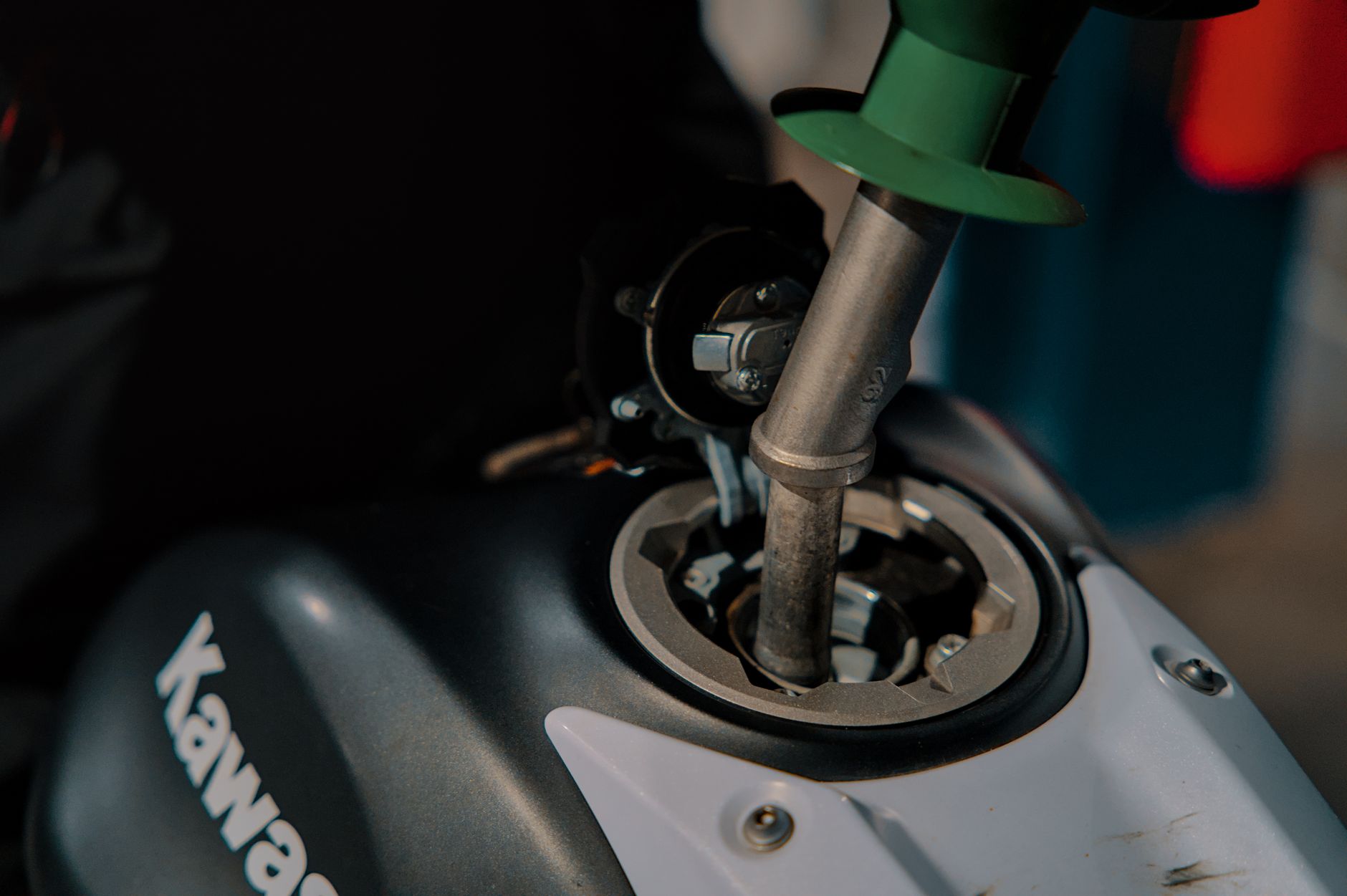


Planning a ride is a lot easier when we know roughly how far an ATV can go before it needs fuel. That is exactly what this ATV fuel range calculator is for. If you are trying to estimate atv fuel range calculator gas tank miles, the basic idea is simple: multiply usable fuel by fuel economy, then adjust for terrain and riding style if needed.
A quick estimate can help us avoid running dry deep on the trail, decide whether to carry extra fuel, and compare one machine’s real-world range against another.
Variables Explained

Below are the main inputs used in an ATV fuel range estimate.
| Variable | What It Means | Typical Range |
|---|---|---|
| Tank Capacity | Total fuel the ATV’s tank can hold | 2.5–6.5 gallons |
| Usable Fuel | Fuel we realistically expect to use before refueling; often slightly less than full capacity | 2.2–6.0 gallons |
| Fuel Economy (MPG) | Average miles per gallon under expected riding conditions | 12–30 mpg |
| Riding Adjustment Factor | Multiplier used to reduce range for mud, sand, hills, cargo, or aggressive riding | 0.70–1.00 |
| Reserve Margin | Fuel or distance we intentionally leave unused as a safety buffer | 10%–25% |
A few notes:
- Utility ATVs often get lower mpg when hauling gear or towing.
- Sport ATVs may burn fuel faster under aggressive throttle use.
- Trail conditions can change range more than many riders expect.
- Cold weather, tire pressure, and rider weight can also affect fuel economy.
The Formula
The simplest ATV fuel range formula is:
Fuel Range (miles) = Usable Tank Capacity (gallons) × Fuel Economy (mpg)
If we want a more realistic trail estimate, we can add a terrain or riding-condition adjustment:
Adjusted Fuel Range (miles) = Tank Capacity × Fuel Economy × Riding Adjustment Factor
Where the riding adjustment factor is usually less than 1.0 when conditions are tough.
Simple worked example
Let’s say an ATV has:
- Tank capacity: 4.5 gallons
- Average fuel economy: 22 mpg
Then:
Range = 4.5 × 22 = 99 miles
If we expect mud, steep climbs, and frequent throttle changes, we might use an adjustment factor of 0.85:
Adjusted range = 4.5 × 22 × 0.85 = 84.15 miles
So a realistic planning estimate would be about 84 miles.
For safety, we recommend planning around the adjusted number, not the maximum theoretical range.
How to Use This Calculator

We recommend using the calculator in four simple steps.
Step 1: Find your tank capacity
Check your owner’s manual or manufacturer specs for the ATV’s fuel tank size in gallons. If your machine has a listed capacity of 5.0 gallons, start there.
Step 2: Estimate your average mpg
Use your own riding history if possible. If not, use a realistic estimate based on your ATV type and terrain. A moderate trail pace might deliver something like 18 to 25 mpg, while deep mud or sand may drop that significantly.
Step 3: Choose an adjustment factor
If conditions are easy, use 1.0. If they are mixed, use something like 0.9. If the route is difficult, muddy, steep, or heavily loaded, use 0.75 to 0.85.
A practical rule of thumb:
- 1.00 = easy riding, hardpack, light load
- 0.90 = mixed trail riding
- 0.80 = rough terrain, hills, mud, or cargo
- 0.70 = very demanding conditions
Step 4: Multiply the numbers
Use the formula:
Range = Tank Capacity × MPG × Adjustment Factor
That gives you an estimated range in miles.
Step 5: Subtract a safety buffer
Even if the calculation says 90 miles, we recommend holding back 10% to 20% as reserve fuel. On remote routes, that margin matters.
{"fields":[{"id":"tank","label":"Tank Capacity","unit":"gallons","default":4.5},{"id":"mpg","label":"Fuel Economy","unit":"mpg","default":22},{"id":"factor","label":"Riding Adjustment Factor","unit":"x","default":0.85}],"formula":"tank * mpg * factor","resultLabel":"Estimated Fuel Range","resultUnit":"miles"}
Worked Examples
Here are a few realistic scenarios to show how the calculator works in practice.
Example 1: Mid-size trail ATV
Suppose we have a trail ATV with:
- Tank capacity: 4.0 gallons
- Fuel economy: 24 mpg
- Adjustment factor: 0.90
Calculation:
Range = 4.0 × 24 × 0.90
Range = 86.4 miles
If we keep a 15% reserve margin:
Planning range = 86.4 × 0.85 = 73.44 miles
A smart trail-planning number would be about 73 miles.
Example 2: Utility ATV hauling gear
Now let’s estimate a heavier utility setup:
- Tank capacity: 5.4 gallons
- Fuel economy: 17 mpg
- Adjustment factor: 0.80
Calculation:
Range = 5.4 × 17 × 0.80
Range = 73.44 miles
With a 20% reserve:
Planning range = 73.44 × 0.80 = 58.752 miles
Rounded, we would plan for about 59 miles before refueling.
Example 3: Easy forest-road ride
For a lighter ride on smoother terrain:
- Tank capacity: 3.6 gallons
- Fuel economy: 28 mpg
- Adjustment factor: 1.00
Calculation:
Range = 3.6 × 28 × 1.00
Range = 100.8 miles
With a 10% reserve:
Planning range = 100.8 × 0.90 = 90.72 miles
That gives us a practical estimate of about 91 miles.
Common Mistakes
Using manufacturer mpg without adjusting for trail conditions
Published fuel economy numbers can be optimistic. Real trail riding often includes idling, climbing, mud, sand, stop-and-go sections, and varying throttle input. We recommend reducing the estimate when planning actual rides.
Forgetting that full tank capacity is not always fully usable
Some riders calculate range using the entire listed tank size, but in practice, not every ounce is easy to use. Fuel pickup, sloshing on slopes, and reserve habits can reduce usable fuel.
Ignoring cargo and passenger weight
Extra gear, racks, hunting equipment, recovery tools, or a passenger can increase fuel consumption. The heavier the load, the lower the real-world range is likely to be.
Planning to zero miles remaining
This is one of the biggest mistakes. If the route is remote, weather changes, trail closures, detours, or getting stuck can all extend the ride. We recommend leaving a reserve instead of aiming to use every drop.
Mixing up gallons and liters
Be careful with units. If your ATV spec sheet lists liters but your mpg estimate is in miles per gallon, convert the tank size first. Otherwise the result will be wrong.
Not recalculating for mud, sand, or deep snow
Loose terrain can drop fuel economy fast. A route that seems manageable on hardpack may become fuel-hungry after rain or in soft surfaces.
Frequently Asked Questions
How many miles can an ATV go on a full tank?
It depends on tank size, engine, terrain, load, and riding style. Many ATVs fall somewhere around 50 to 100 miles per tank, but real-world numbers vary widely.
What is a good mpg for an ATV?
A rough range is 12 to 30 mpg. Larger utility models under load may be at the lower end, while lighter machines on easier terrain may do better.
Should I use total tank capacity or usable fuel?
Usable fuel is better for planning. It gives us a more conservative and realistic estimate, especially for remote trail rides.
How much reserve fuel should I keep?
We generally recommend keeping 10% to 20% in reserve. On unfamiliar or backcountry routes, a larger margin is often the safer choice.
Does idling affect ATV fuel range?
Yes. Long periods of idling burn fuel without adding miles, which reduces overall mpg and lowers your actual range.
Can tire pressure affect gas tank miles?
Yes. Improper tire pressure can increase rolling resistance and reduce efficiency. It is not usually the biggest factor, but it can contribute.
Is this calculator accurate for every ATV?
It is best used as an estimate, not a guarantee. The formula is straightforward, but actual fuel range depends on your machine, maintenance, terrain, weather, and riding habits.
What is the safest way to plan ATV fuel range?
We recommend calculating your theoretical range, applying a realistic riding adjustment factor, and then subtracting a reserve margin. That gives a safer trip-planning number than relying on ideal conditions.
Knowing your atv fuel range calculator gas tank miles estimate can make route planning much easier. With a simple formula and a conservative buffer, we can make smarter decisions about distance, fuel stops, and whether to carry extra gas on the trail.
Get our best guides in your inbox