ATV Trail Difficulty Ratings Explained: Green, Blue, Black and Beyond

Alana Azzouz is a Senior Editor at Searchshop Media Network with over a decade of experience in consumer content quality and editorial standards. She has reviewed thousands of product guides, buying articles, and comp…
Why trust us
BestATVTrails trail guides are researched by riders with decades of powersports experience. Our lead researcher spent 30+ years in powersports retail and has ridden trails across a dozen US states. Every gear recommendation is sourced from real product research matched to specific terrain — not paid placements or generic affiliate lists.
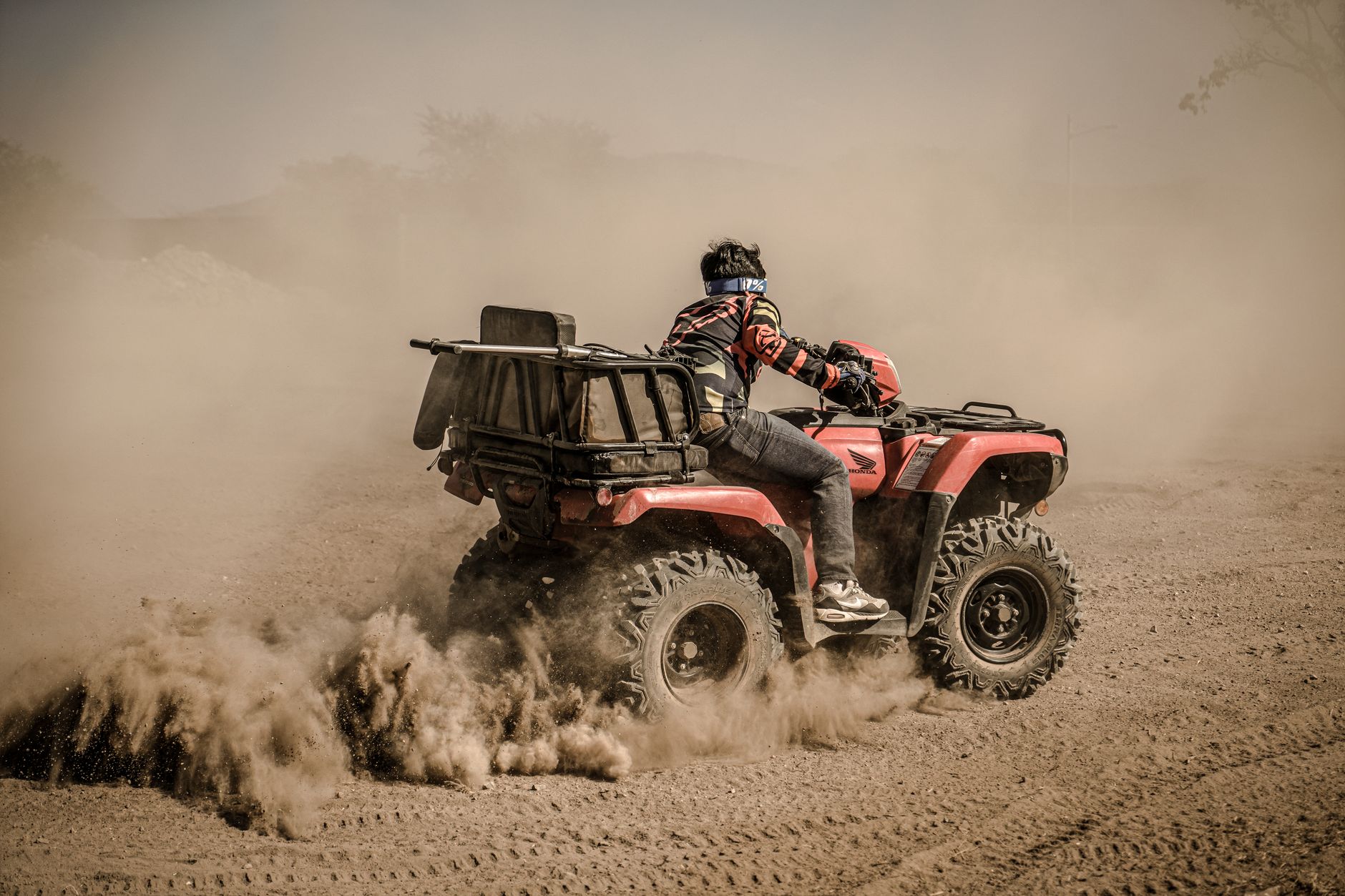
ATV Trail Difficulty Ratings Explained: Green, Blue, Black and Beyond
Gear for This Trail

When we match gear to trail difficulty ratings, we focus on versatility. Riders moving between Green, Blue, and Black trails need equipment that handles dust, mud, roost, branches, changing temperatures, and the possibility of getting delayed far from the trailhead.
| Gear Type | Brand | Product | Why It Suits Rated ATV Trail Systems | Approx. Price |
|---|---|---|---|---|
| Helmet | Bell | Qualifier Full-Face Helmet | A full-face helmet makes sense when trail systems mix dust, low branches, loose rock, and changing speeds. The Bell Qualifier is a practical choice for riders who may spend one hour on easy gravel and the next on tighter Blue terrain with more debris. | $120-$180 |
| Protective Gear | Alpinestars | Bionic Action Chest Protector | Black and even rougher Blue trails can throw bars, branches, and roost at your upper body. This chest protector adds impact coverage without being overly bulky for all-day trail riding. | $130-$170 |
| Gloves | Fox Racing | Dirtpaw Gloves | Rated systems often combine gravel, mud, and rocky chatter that can fatigue hands. These gloves offer grip and light knuckle protection, which helps on longer days with repeated braking and steering corrections. | $25-$40 |
| Terrain-Specific Item | Garmin | Tread Powersport GPS | One of the biggest challenges on large rated systems is route-finding at intersections and connectors. A dedicated powersports GPS helps riders confirm whether the next segment is Green, Blue, or Black and avoid accidentally entering terrain above their comfort level. | $500-$700 |
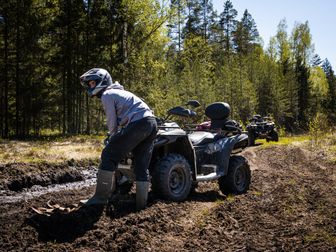
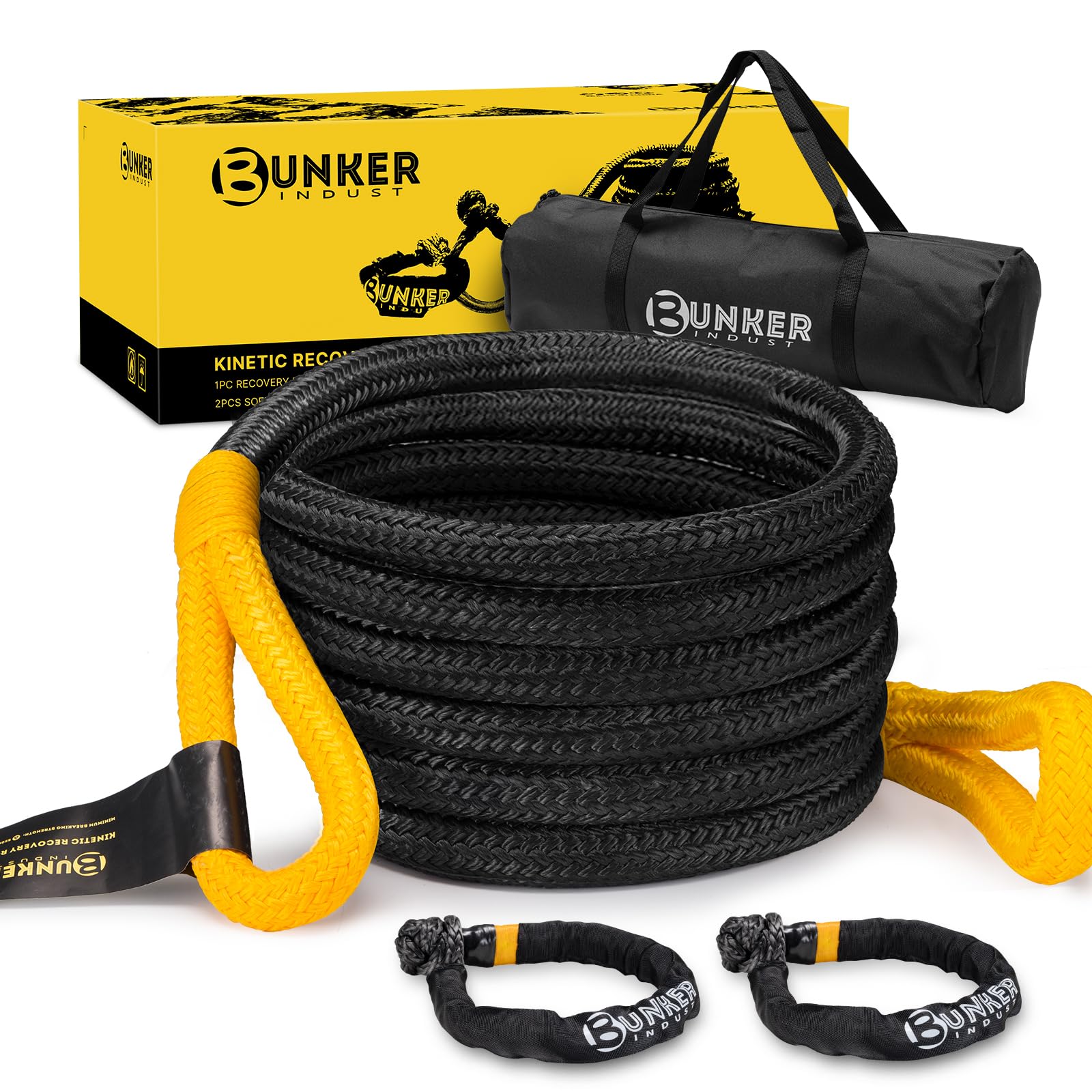
| Recovery/Utility Item | Rhino USA | Recovery Tow Strap | Ratings can change fast after rain, and even intermediate trails can leave machines stuck in mud or angled awkwardly in ruts. A quality recovery strap is one of the most useful items to carry when exploring Blue or Black sections with a partner. | $30-$45 |
| Comfort/Utility Item | Nelson-Rigg | Hurricane ATV Rear Rack Bag | On bigger trail systems, riders need room for water, snacks, layers, tools, and first aid. A weather-resistant rack bag is especially useful when a “quick loop” turns into a full day because conditions slow progress. | $90-$130 |
A quick note on setup: riders who expect to spend most of the day on Green routes may prioritize comfort and storage, while riders targeting Black trails should lean harder into protection, navigation, and recovery gear.
Introduction
If you've ever wondered ATV trail difficulty ratings explained in plain English, you're not alone. One of the most common questions we research at BestATVTrails is how to tell whether a route marked Green, Blue, Black, or Double-Black will actually feel manageable once you're on the machine. Trail systems across the U.S. use these ratings to help riders match terrain to experience level, but the signs only tell part of the story. Surface conditions, weather, machine setup, and rider skill can all make the same trail feel very different from one trip to the next.
Riders visit rated ATV trail systems because they offer structure, progression, and a better chance of finding terrain that fits the day. A family on utility quads may want wide, forgiving Green loops, while experienced riders may head straight for rocky Black diamond climbs or technical mud sections. Understanding the rating system helps us choose smarter routes, pack the right gear, and avoid getting in over our heads. In this guide, we break down what each rating usually means, where the gray areas are, and how to prepare for each level.
Trail Overview

Because this is a guide to the rating system rather than a single park, the “trail overview” below reflects how rated ATV systems commonly operate across major public OHV areas such as Hatfield-McCoy Trails in West Virginia, Paiute ATV Trail in Utah, Brimstone Recreation in Tennessee, and Ride Royal Blue in Tennessee.
- Total miles: Typically 50 to 700+ miles depending on the system
- Difficulty range: Green, Blue, Black, and in some systems Double-Black or Extreme/Most Difficult
- Elevation: Varies by region; from near sea level in forest systems to 10,000+ feet on western mountain routes
- Permit requirements: Usually required on managed trail systems; examples include day passes, annual permits, or OHV trail permits
- Best season: Spring through fall in most regions; year-round in some southern systems; summer to early fall at high elevation
- Nearest town: Depends on the trail system; common examples include Gilbert, WV; Marysvale, UT; Huntsville, TN; and Pioneer, TN
A few real-world examples help put ratings into context:
- Hatfield-McCoy Trails (WV): Large managed trail network with color-coded routes and permits required
- Paiute ATV Trail (UT): Long-distance mountain riding with major elevation swings, weather changes, and mixed difficulty
- Brimstone Recreation (TN): Extensive private trail system with beginner to expert terrain and event weekends
- Ride Royal Blue (TN): Broad mix of scenic forest roads, muddy connectors, and technical hill climbs
Trail Conditions & Terrain
Trail ratings only make sense when we connect them to what the ground actually looks like. Across most ATV systems, terrain falls into a few recurring categories.
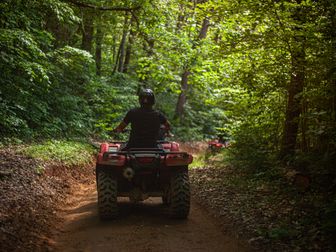
Green trails are usually wider and more forgiving. Expect packed dirt, gravel, decomposed rock, hard clay, or maintained forest-road-style surfaces. Obstacles are limited, turns are broader, and grades are moderate. On a dry day, these trails often feel approachable for newer riders. After rain, though, even a Green route can develop slick clay, standing water, braking bumps, or shallow ruts.
Blue trails usually add more narrow sections, steeper climbs and descents, embedded rock, loose stone, tighter switchbacks, and deeper whoops. Creek crossings may be more frequent, and trail width can shrink enough that line choice matters. In mountain systems like Paiute or Hatfield-McCoy, Blue routes may also include shelf-road exposure, off-camber corners, and erosion damage that changes through the season.
Black trails are where consequences rise quickly. We commonly see ledges, larger rock gardens, axle-deep ruts, steep grades, muddy hill climbs, loose baby-head rock, root webs, and sharp transitions that can hang up longer-wheelbase machines. Water crossings may have uneven bottoms, and descents often demand strong braking control. In wet conditions, Black trails can become dramatically harder than their posted rating suggests.
Double-Black or Extreme trails are typically intended for highly experienced riders with properly equipped machines. These routes may include severe rock steps, deep mud holes, winch-required sections, very steep ascents, narrow tree gaps, tippy off-camber lines, or highly technical descents with little room for error. On some systems, these trails are less about speed and more about controlled problem-solving.
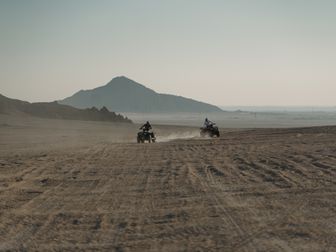
We also recommend remembering that surface type changes the meaning of the color. A Green trail in the desert may be sandy and washboarded. A Green trail in Appalachia may be smooth until rain turns clay into a skating rink. A Blue trail in the Rockies may feel harder simply because of altitude, loose shale, and long descents. Ratings are useful, but they are not universal measurements.
Difficulty & Who It's For
Below is the scale we recommend using when evaluating a trail system map.
Green Circle: Beginner-Friendly
Best for: New riders, families, youth riders on appropriate machines, casual sightseeing trips, and utility ATV riders carrying gear.
Green trails usually suit riders who are still learning throttle control, braking, body positioning, and cornering. These routes are often the best place to practice reading terrain, standing on the pegs or floorboards when appropriate, and learning how the machine reacts on loose surfaces. We recommend Green trails for anyone riding an unfamiliar ATV for the first time or introducing passengers to a legal two-up machine.
Blue Square: Intermediate
Best for: Riders with basic trail experience who are comfortable with moderate hills, rougher surfaces, and some obstacle management.
Blue trails are the sweet spot for many recreational riders. They often deliver the most variety without pushing into true recovery territory. To enjoy Blue terrain, riders should already be comfortable with momentum control, choosing lines through rocks or ruts, and handling moderate mud or water crossings. A stock 4x4 ATV with decent tires is usually enough for many Blue routes, but skill matters more than accessories.
Black Diamond: Advanced
Best for: Experienced riders with strong machine control, good judgment, and a willingness to turn around when conditions worsen.
Black trails demand more than confidence. They require real experience reading terrain before entering it. Riders should know how to approach ledges, manage steep descents, recover from wheel slip, and ride technical sections without panicking. We recommend Black trails only when riders have suitable protective gear, enough fuel, a riding partner or group, and some recovery equipment.
Double-Black Diamond: Expert/Extreme
Best for: Highly experienced riders on well-prepared machines, often in groups, with recovery tools and route awareness.
Double-Black routes are not progression trails for “seeing how it goes.” They are often places where mistakes cost time, bodywork, or more. If a trail system uses this category, we recommend treating it seriously. Riders should have advanced technical skills, understand the machine's limits, and be willing to bypass sections if weather or traffic has made them worse.
Permits & Access
Permit rules vary widely, but rated ATV systems almost always have some combination of access fees, machine registration requirements, and parking rules.
- Parking: Most managed systems provide designated trailhead or staging parking. Popular examples include town connectors and trailhead lots at Hatfield-McCoy, resort and campground staging areas at Brimstone, and forest access points along the Paiute trail network.
- Permit costs: Expect anything from roughly $15-$40 for day passes on private systems to $50-$100+ annual permits on larger managed networks. Hatfield-McCoy, for example, uses permit-based access for non-residents and residents, while private systems like Brimstone commonly offer day and annual ride passes.
- Reservation requirements: Many public trail systems do not require trail reservations, but lodging, event weekends, and guided rides often do. Private parks may require waivers or online account setup before arrival.
- OHV sticker requirements: In many western states, an OHV sticker or nonresident permit is required in addition to any local trail pass. Utah, for example, commonly requires current OHV registration or permits depending on residency and machine status. Some eastern private systems focus more on their own permit structure than state sticker programs.
- Street-legal connectors: Some systems allow limited road connections if the ATV or SxS is street legal under local law. Others do not. Always verify before planning fuel or food stops through town.
We recommend checking the official trail authority or park website before every trip because fees, waiver systems, and seasonal closures can change.
Tips for Riding This System
- Start one level below your confidence. If you usually ride Blue trails, begin the day on Green or easy Blue terrain to gauge traction, weather, and machine feel before committing to harder sections.
- Watch for weather-driven difficulty changes. Clay, shale, and rooted climbs can jump a full rating in practical difficulty after rain, snowmelt, or heavy traffic.
- Use maps, not assumptions. On major systems, a scenic connector can suddenly branch into a Black climb. Keep a current paper map or GPS route loaded before leaving the trailhead.
- Ride with enough fuel and water for delays. Technical Black trails are slower than they look on the map, especially if your group has to spot each other or perform a recovery.
- Turn around early, not late. If a section feels above your skill level at the entrance, it rarely gets easier deeper in. There is no shame in backing out while the trail is still manageable.
- Adjust tire pressure for terrain within manufacturer guidance. Rocky systems may call for a different setup than hardpack or mud-heavy routes, but avoid going so low that you risk bead issues or rim damage.
- Respect one-way rules, closures, and bypasses. Many rated systems use directional travel and seasonal closures to reduce collisions and erosion. Ignoring them can create serious safety problems.
FAQ
Do ATV trail ratings mean the same thing everywhere?
No. Green, Blue, and Black are helpful guides, but each trail system applies them a little differently. A Blue trail at Paiute may feel very different from a Blue trail at Brimstone because of elevation, rock type, width, and weather.
Can beginners ride a trail system that includes Black and Double-Black routes?
Yes. Many of the best systems include beginner-friendly Green loops and easier connectors alongside advanced terrain. The key is staying disciplined with route planning and not following more experienced riders onto harder lines.
What is the most important gear for understanding and riding by trail rating?
A quality helmet and reliable navigation are the two essentials we prioritize. A full-face helmet protects against common trail hazards, while a GPS or current map helps riders avoid entering terrain that exceeds their skill level.
Should we trust the posted rating if conditions look worse than expected?
No. We recommend trusting current conditions over the sign. Rain, washouts, fallen trees, deepened ruts, and traffic damage can make a posted Blue trail ride like a Black on any given weekend.
Get our best guides in your inbox
Final Take
Understanding ATV trail ratings is less about memorizing colors and more about connecting those colors to real terrain, real conditions, and real rider ability. Green, Blue, Black, and Double-Black categories are valuable tools, especially on large systems like Hatfield-McCoy, Paiute, Brimstone, and Ride Royal Blue, but they work best when we combine them with honest self-assessment and smart gear choices.
When in doubt, we recommend choosing the easier route first, carrying navigation and recovery basics, and building up gradually. That approach leads to safer rides, fewer mechanical surprises, and a lot more fun on the trail.
Top Picks & Comparison
| # | Product | Price | Rating | ||
|---|---|---|---|---|---|
| #1 | |
BUNKER INDUST 1.25"×20ft Kinetic Recovery Rope with 2 Soft Shackle Kit, 55000lbs Nylon Tow Rope Heavy Duty Snatch Strap Offroad Recovery Kit for 4x4 Jeep Truck ATV UTV SUV |
$89.99 | (110) | Check Price on Amazon → |