ATV Trail Safety Rules: Regulations, Rights-of-Way, and Riding Responsibly

Salem Hassan founded Travelcamp RV and brings 30+ years of hands-on RV, marine, and powersports experience to every review.
✎ Reviewed by Salem Hassan — Founder, Travelcamp · 30+ years in RV, marine, and powersports
Why trust us
BestATVTrails trail guides are researched by riders with decades of powersports experience. Our lead researcher spent 30+ years in powersports retail and has ridden trails across a dozen US states. Every gear recommendation is sourced from real product research matched to specific terrain — not paid placements or generic affiliate lists.
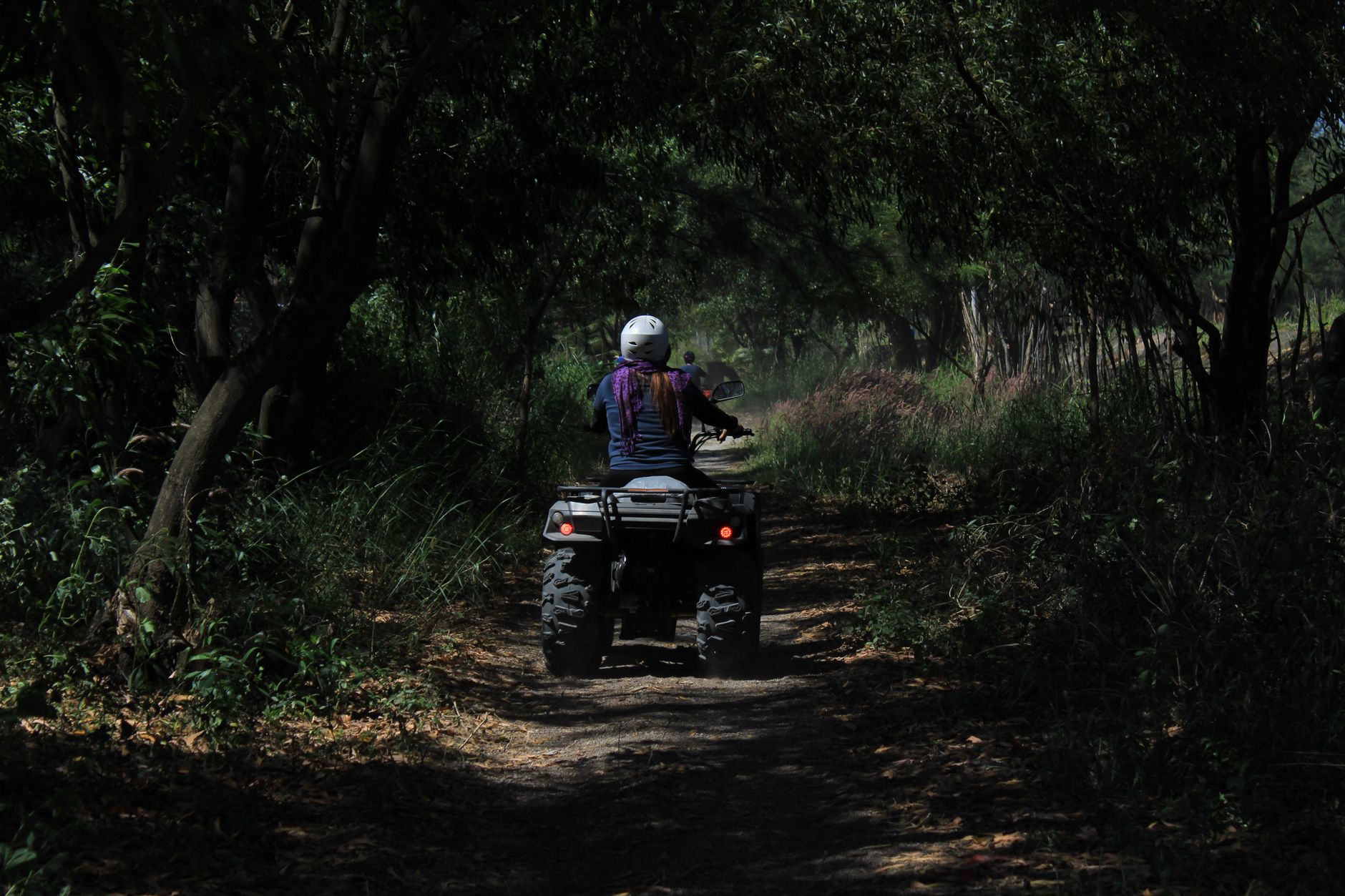


ATV trail riding safety rules regulations are not just about avoiding tickets or trail closures. They are the framework that helps riders prevent collisions, protect access, and reduce injuries on shared routes. At BestATVTrails, we researched the core rules, standards, and responsible riding practices that matter most when you are navigating public trails, OHV areas, forest roads, and mixed-use routes.
Because ATV laws vary by state, province, land manager, and trail system, the safest approach is to combine three things every time you ride: legal compliance, defensive riding, and trail courtesy. That combination protects you, other trail users, and the long-term future of off-road access.
Why This Matters

Ignoring ATV trail safety rules can lead to immediate and serious consequences. Collisions at blind corners, rollovers on off-camber terrain, and crashes caused by excessive speed are among the most common trail incidents. Many of these events are preventable when riders follow posted regulations, wear compliant protective equipment, and respect right-of-way rules.
There are also broader consequences. Riding off designated trails can damage habitat, trigger erosion, and lead to enforcement actions or permanent closures. Failing to yield to hikers, horses, mountain bikers, or uphill traffic can escalate into dangerous conflicts. Operating an ATV without required registration, lighting, spark arrestors, or helmets can result in fines, impoundment, or denied access to certain trail systems.
We recommend treating trail rules as a safety system, not a list of suggestions. Responsible riding helps keep public trust, preserves trail networks, and reduces the chance that one rider’s mistake affects everyone else.
Relevant Standards & Regulations
The exact rules that apply to your ride depend on the vehicle type, rider age, land designation, and local law. Still, several widely recognized standards and federal requirements shape ATV safety expectations in the U.S.
ANSI/OPEI B71.9: Consumer turf care equipment standard that includes key design and safety labeling requirements for all-terrain vehicles used in the U.S. market. It supports manufacturer warnings, age recommendations, and operational safety information riders should follow.
16 CFR Part 1420: U.S. Consumer Product Safety Commission rule incorporating mandatory requirements for ATVs, including action plan obligations tied to ATV safety, rider training support, age recommendations, and safety messaging.
36 CFR 261: U.S. Forest Service prohibitions that can apply to motor vehicle use on National Forest System lands, including operating off designated routes, violating closures, or using vehicles inconsistently with Motor Vehicle Use Map restrictions.
36 CFR Part 212, Subpart B: Travel management regulations governing designation of roads, trails, and areas for motor vehicle use on National Forest System lands. Riders must stay on designated routes where required.
43 CFR 8341: Bureau of Land Management off-road vehicle rules addressing operation in closed or limited areas and requirements to comply with route designations and resource protection restrictions.
36 CFR 327: U.S. Army Corps of Engineers rules for public use areas, including vehicle operation restrictions in recreation areas under Corps management.
NFPA 1906: Wildland fire apparatus standard that is not a trail-riding rule, but it reinforces the importance of spark arrestor and fire-prevention considerations in off-road environments where local agencies require approved exhaust systems.
SAE J1287: Stationary sound test procedure commonly referenced in off-highway vehicle sound enforcement programs. Many riding areas use sound limits and testing methods derived from SAE procedures.
USDA Forest Service MVUM Requirements: Motor Vehicle Use Maps identify where motor vehicles are legally allowed on many national forest routes. Riding outside those designations can be both unsafe and unlawful.
These standards do not replace local law. We recommend checking state OHV statutes, park rules, forest orders, and trailhead postings before every ride.
Key Safety Principles

Ride Only Where ATVs Are Allowed
The first rule of safe trail riding is legal route use. Designated trails are evaluated for vehicle type, width, terrain, environmental sensitivity, and user conflict. Riding on closed routes, hiking-only trails, or private land without permission creates both legal and safety risks.
Practical application: verify the trail is open to your vehicle class, confirm seasonal openings, and carry the relevant map or digital route file.
Respect Rights-of-Way and Shared-Use Etiquette
Right-of-way rules vary by trail system, but some common principles apply widely: slower users are more vulnerable, horses require extra caution, and uphill traffic often has priority on narrow grades because restarting on a climb can be difficult and hazardous.
Practical application: slow early, yield predictably, stop where visibility allows, shut off or idle quietly around horses if requested, and never assume the other user sees you.
Match Speed to Sight Distance
Many trail crashes happen because riders travel faster than they can stop within the distance they can see. Dust, vegetation, blind turns, creek crossings, and hill crests all reduce reaction time.
Practical application: ride at a speed that lets you stop before a hidden obstacle, oncoming rider, washout, or gate.
Wear the Right Protective Equipment
A properly fitted helmet is foundational. Eye protection, over-the-ankle boots, gloves, long sleeves, and long pants add important protection against branches, roost, impacts, and burns.
Practical application: use gear that meets applicable standards where possible, replace damaged helmets, and avoid casual footwear or unsecured clothing.
Ride Sober and Within Skill Limits
Alcohol, drugs, fatigue, and overconfidence are recurring factors in serious ATV incidents. Trail conditions can change rapidly, and technical obstacles often punish poor judgment.
Practical application: assign no riding role to impaired operators, turn around when terrain exceeds your experience, and take certified rider training if you are new or returning after a long break.
Protect the Trail to Protect Access
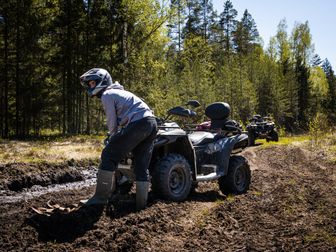
Responsible riding is part of safety because damaged trails become hazardous trails. Deep ruts, widened bypasses, and mud bogging can make routes unstable and increase conflict with land managers.
Practical application: stay on the trail, avoid spinning tires unnecessarily, and respect wet-weather closures.
Step-by-Step Safe Practices
- Confirm legal access before departure. Check state OHV laws, registration requirements, age limits, spark arrestor rules, and whether the route is open to ATVs.
- Review the managing agency’s map. Use MVUMs, BLM travel maps, park maps, or club maps to verify designated routes and seasonal restrictions.
- Inspect the ATV. Check tires, brakes, throttle return, lights, fuel level, oil, chain or shaft condition, and controls.
- Verify required equipment. Bring a compliant helmet, eye protection, gloves, boots, first-aid kit, water, communication device, and tool kit.
- Check sound and exhaust compliance. Make sure your machine meets local sound limits and has any required spark arrestor.
- Plan for weather and daylight. Rain can change traction and creek depth quickly; low light reduces sight distance and visibility to others.
- Ride with a map and tell someone your plan. Share your route, expected return time, and emergency contact information.
- Warm up conservatively. Start at a moderate pace until you assess traction, braking feel, and trail traffic.
- Stay right unless signage says otherwise. On two-way trails, hold your line, avoid cutting corners, and expect oncoming traffic.
- Slow at intersections, blind turns, and hill crests. Cover the brakes and be prepared for stopped vehicles, hikers, or washouts.
- Yield early and clearly. Make your intentions obvious to riders and non-motorized users; do not force others off the trail.
- Use body positioning for stability. Shift weight appropriately on climbs, descents, and off-camber sections rather than relying only on throttle.
- Avoid risky group behavior. Leave following distance, stagger only where appropriate, and never roost or pressure less experienced riders.
- Stop and reassess hazards. Walk unknown obstacles, water crossings, or steep descents before committing.
- Exit responsibly. Clean the machine if required to prevent invasive species spread and report major hazards to the land manager.
Common Hazards & How to Avoid Them
Blind Corners and Limited Visibility
Blind turns are high-risk because riders often drift wide or carry too much speed. Dust and foliage make the problem worse.
How to avoid it: reduce speed before the corner, stay on your side of the trail, and avoid accelerating hard until you can see the exit.
Hill Crests and Steep Grades
A crest can hide stalled vehicles, erosion cuts, or oncoming users. On steep climbs, loss of momentum can lead to rollback or unstable turning.
How to avoid it: approach under control, stand or shift weight as needed, keep a straight line, and know your ATV’s climbing limits.
Loose Surfaces, Mud, and Off-Camber Sections
Gravel, sand, wet roots, and side slopes reduce traction and increase rollover risk.
How to avoid it: lower speed, make smooth steering inputs, avoid abrupt braking, and keep your weight balanced toward the uphill side when appropriate.
Water Crossings
Creeks and puddles can conceal rocks, holes, debris, or current stronger than it appears.
How to avoid it: stop and inspect first, confirm legal crossing points, enter slowly, and avoid water deep enough to affect intake, traction, or engine reliability.
Mixed Trail Traffic
ATV riders may encounter SxSs, dirt bikes, full-size vehicles on shared roads, mountain bikers, hikers, and equestrians.
How to avoid it: expect every user type, slow down well before passing, communicate clearly, and give vulnerable users extra space.
Mechanical Failure Far From Help
A failed tire, broken throttle cable, overheating issue, or dead battery can become a safety emergency in remote terrain.
How to avoid it: perform a pre-ride inspection, carry basic repair items, avoid riding alone in remote areas, and maintain the machine according to the manufacturer schedule.
Fire Risk and Hot Exhaust Components
Dry grass, brush, and hot exhaust parts can create ignition hazards, especially in summer and drought conditions.
How to avoid it: use approved spark arrestors where required, do not park over dry vegetation, and comply with fire restrictions immediately.
Authoritative Resources
For current rules and official guidance, we recommend starting with these sources:
- U.S. Consumer Product Safety Commission (CPSC): https://www.cpsc.gov/
- USDA Forest Service Motor Vehicle Use Maps and travel management: https://www.fs.usda.gov/
- Bureau of Land Management OHV information: https://www.blm.gov/programs/recreation/recreation-programs/off-highway-vehicles
- National Park Service regulations and park-specific OHV rules: https://www.nps.gov/
- U.S. Army Corps of Engineers recreation rules: https://www.usace.army.mil/
- SAE International standards information: https://www.sae.org/
- ANSI standards portal: https://www.ansi.org/
- ATV Safety Institute rider education resources: https://www.atvsafety.org/
If you ride outside the U.S., consult your provincial, territorial, or national land-management and transportation authorities for local OHV law.
Frequently Asked Questions
Do uphill riders always have the right-of-way?
Not always, but uphill traffic often gets priority on narrow grades because restarting on a climb can be harder and less safe. Follow posted rules first, then use caution and courtesy.
Do I need a helmet on every ATV trail?
Many jurisdictions and managed trail systems require helmets, especially for younger riders, and some require eye protection as well. Even where not legally required, we strongly recommend a properly fitted helmet every ride.
Can I ride an ATV on any forest road?
No. Many forest roads are restricted by vehicle type, season, width, or local order. Check the applicable MVUM, travel map, or agency designation before riding.
What is the biggest mistake riders make on shared trails?
The most common pattern is riding too fast for visibility and traffic. Speed reduces time to react to hikers, horses, stopped vehicles, and trail damage.
Are sound limits really enforced?
Yes, in many riding areas. Sound compliance may be checked using procedures based on standards such as SAE J1287, and excessive noise can lead to citations or loss of access.
Is off-trail riding only an environmental issue?
No. It is also a safety issue. Off-trail travel increases the chance of hitting hidden obstacles, getting lost, entering unstable terrain, or encountering unauthorized areas and closures.
What should we carry on every ride?
At minimum: helmet, eye protection, water, first-aid kit, map or GPS, phone or emergency communicator, tool kit, tire repair supplies if applicable, and any legally required documents.
Responsible trail riding is a combination of law, judgment, and respect. When we follow ATV trail riding safety rules regulations, understand rights-of-way, and ride within conditions, we reduce injuries and help keep trails open for everyone who depends on them.
Get our best guides in your inbox