Family-Friendly ATV Trails: Best Systems for Beginners and Kids

Ellen Kietzmann brings more than 25 years of senior leadership in the RV and outdoor recreation industry. She spent 22 years at Blue Ox — rising from Vice President of Sales & HR to President — where she grew the deal…
Why trust us
BestATVTrails trail guides are researched by riders with decades of powersports experience. Our lead researcher spent 30+ years in powersports retail and has ridden trails across a dozen US states. Every gear recommendation is sourced from real product research matched to specific terrain — not paid placements or generic affiliate lists.

Family-Friendly ATV Trails: Best Systems for Beginners and Kids
Trail Overview

Rather than covering one single trail, this guide highlights three well-known systems that regularly come up in beginner-friendly trip planning: Paiute ATV Trail side loops near Marysvale, Utah; Croom Motorcycle Area in Brooksville, Florida; and the Black Hills National Forest motorized route network near Hill City, South Dakota. Each offers sections that can suit families when routes are chosen carefully.
Key Stats at a Glance
| Trail System | Total Miles | Difficulty Range | Elevation | Permit Requirements | Best Season | Nearest Town |
|---|---|---|---|---|---|---|
| Paiute ATV Trail (selected family loops) | 2,000+ mile regional network; beginner families should focus on shorter side loops | Green to Black | Roughly 5,500-11,000 ft | Utah non-resident OHV permit if applicable; street-legal requirements vary by connector roads | Late June to early October | Marysvale, UT |
| Croom Motorcycle Area | About 2,600 acres with marked trails and open riding zones | Green to Blue | Mostly flat, low elevation | Florida OHV requirements apply; day-use fees may apply through Withlacoochee State Forest access rules | Fall through spring | Brooksville, FL |
| Black Hills National Forest motorized routes | Hundreds of miles across the forest; families should use easy designated roads/trails | Green to Black | Roughly 4,000-7,000 ft | Black Hills Motorized Trail Permit required for many users; state registration rules also apply | Late spring to early fall | Hill City, SD |
Introduction
Finding truly family friendly ATV trails can be harder than it sounds. Many OHV systems advertise beginner access, but once we dig into trail maps, elevation changes, traffic patterns, and obstacle frequency, only a handful consistently stand out as good choices for new riders and kids. For families, the best trail systems usually share a few traits: open terrain, wide routes, gentle grades, clear signage, and enough room to ride at low speeds without feeling crowded or pressured by faster machines.
In this guide, we focus on trail systems that work well for first-time ATV riders, youth riders under close adult supervision, and families who want a low-stress day outdoors. Riders visit these areas because they offer scenic mileage without demanding technical skills, and because they make it easier to build confidence before moving on to tighter woods trails or steeper mountain routes. We also highlight the safety side that matters most for children, including helmets, gloves, chest protection, and simple trail-planning habits that help keep beginner rides fun and manageable.
Trail Conditions & Terrain

Choosing family-safe riding terrain is less about the name of the trail system and more about which sections of that system you ride. We researched the three areas above because they each include easier routes where families can stay on wide, visible terrain and avoid the more technical segments.
Paiute ATV Trail, Utah
The Paiute system is famous for its scale, but that size can actually help families because it offers many ways to build short, easier rides. Near Marysvale, beginner-friendly connectors and scenic loops often feature graded dirt roads, hard-packed surfaces, mild gravel, and broad valley routes rather than narrow shelf trails. In the easier zones, obstacles are usually limited to washboard sections, small embedded rocks, shallow ruts, and occasional loose corners.
Creek crossings vary by route, but families should generally avoid any loop that includes repeated water crossings or steep climbs. Grades on the easier sections are moderate, though elevation can affect both machine performance and rider fatigue. Afternoon dust can also become an issue in dry weather, especially on shared roads with side-by-sides.
Croom Motorcycle Area, Florida
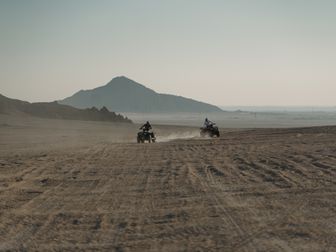
Croom is one of the better-known beginner OHV areas in the Southeast because it combines sandy open stretches, low elevation, and multiple route choices. Terrain here is typically sugar sand to firmer sand with some hard-packed sections under tree cover. Families often like Croom because it allows beginners to learn throttle control, steering, and braking without dealing with mountain grades or rock ledges.
The main challenge is sand. Even on easier routes, front-end wandering can surprise first-time riders. Whoops and soft patches form quickly depending on traffic. There are no major elevation changes, and creek crossings are generally not the defining obstacle, but loose sand can be tiring for younger riders. Because visibility can change around turns and small rises, low speed and spacing matter.
Black Hills National Forest, South Dakota
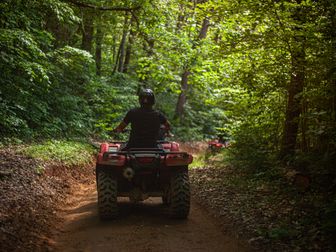
The Black Hills route network gives families a chance to ride scenic forest roads, wider two-track, and designated motorized connectors through pine forest and rolling hills. The easiest routes are often old roads with packed dirt, light gravel, and occasional shallow mud after rain. Compared with more technical mountain systems, the beginner-friendly sections here usually have gentler grades and better sight lines.
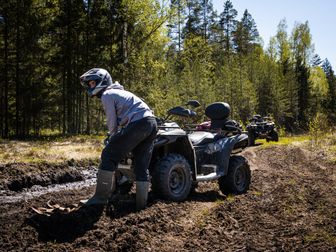
Expect loose rock in places, rain ruts on less-maintained segments, and puddles or slick clay after storms. Some roads climb gradually, but families can usually avoid steep or exposed terrain by sticking to designated easy routes near staging areas. Wildlife, changing weather, and occasional tourist traffic on shared access roads are bigger concerns than true technical obstacles.
Difficulty & Who It's For
We use the common Green / Blue / Black / Double-Black framework to help families choose realistic routes.
Green — Best for true beginners and supervised kids
Green routes are the sweet spot for family riding. We recommend these for:
- First-time ATV riders
- Youth riders on age-appropriate machines
- Parents riding with children at low speeds
- Families practicing turns, braking, and spacing
On these routes, expect wide trail surfaces, mild grades, easy visibility, and few obstacles. At Paiute, that usually means broad scenic connectors rather than high alpine side trails. At Croom, it means flatter, less chopped-up sandy sections. In the Black Hills, it means designated easy roads and open two-track.
Blue — Good for confident beginners progressing slowly
Blue routes can work for families with some experience, especially if adults pre-ride or closely review the map. These may include:
- More loose sand or gravel
- Short steeper climbs
- Tighter corners
- Mild rock gardens or deeper ruts
We recommend Blue only when the youngest riders already have solid control over throttle, braking, and body position.
Black — Not ideal for most family groups
Black trails often add technical climbs, deeper whoops, larger rocks, ledges, mud, or more remote terrain. These routes are usually better for experienced adults than for mixed-skill family groups.
Double-Black — Avoid for beginner family rides
Double-Black terrain is generally unsuitable for kids and first-time riders. These sections may involve major obstacles, steep grades, aggressive exposure, or recovery challenges that turn a fun family day into a stressful one.
Our overall rating for the family-friendly sections of these systems: Green to easy Blue. If your goal is a safe introduction to ATV riding, stay firmly in the Green category for at least the first several outings.
Gear for This Trail
For beginner-friendly systems, we focus less on extreme-performance gear and more on comfort, visibility, impact protection, navigation, and easy recovery. Children should always wear a properly sized DOT-approved helmet and protective gear, even on open terrain and low-speed routes.
| Gear Type | Brand | Product | Why It Suits This Trail | Approx. Price |
|---|---|---|---|---|
| Helmet | Bell | Bell Qualifier Full-Face Helmet | A full-face helmet makes sense for dusty open terrain like Paiute and the Black Hills and for sand roost at Croom. It offers solid ventilation and broad availability in sizes that work for many riders. For youth riders, choose a true youth-specific Bell model or another youth-rated full-face option in the correct size. | $120-$180 |
| Protective Gear | Alpinestars | Bionic Action Chest Protector | For kids and beginners riding around other machines, a lightweight chest protector adds impact coverage without feeling too bulky on easy rides. It is useful in open family systems where low-speed tip-overs and roost are more likely than major crashes. | $130-$170 |
| Gloves | Fox Racing | Dirtpaw Gloves | These are a practical match for beginner trail systems because they improve grip on dusty bars, protect hands from brush, and are comfortable enough for all-day, low-speed riding. They also work well in sandy conditions like Croom. | $25-$35 |
| Terrain-Specific Item | Garmin | eTrex 32x Handheld GPS | On large networks like Paiute and the Black Hills, route-finding matters. A simple handheld GPS helps families stay on designated easy routes, mark the truck, and avoid accidentally wandering onto harder terrain. | $180-$250 |
| Recovery / Utility | Rhino USA | Tow Strap Recovery Kit | Even easy trails can mean a stuck machine in sand at Croom or mud after rain in the Black Hills. A compact recovery strap is a smart family-group item that takes little space and solves common beginner problems. | $30-$50 |
| Comfort / Utility | CamelBak | M.U.L.E. Hydration Pack | Family rides often move slowly and stop often, which can make hydration easy to overlook. A hydration pack is especially useful at elevation in Utah and during warm-weather riding in Florida. | $100-$140 |
Permits & Access
Permit rules change, so we always recommend checking the managing agency before loading up. Here is the practical overview families usually need.
Paiute ATV Trail, Utah
Most riders stage near Marysvale using local trailheads, lodging access points, or nearby staging areas tied into the broader Paiute network. Utah generally requires current OHV registration, and non-residents commonly need a Utah non-resident OHV permit if their machine is not street legal under reciprocal rules. If your planned route uses town connectors or roads, verify whether your ATV must meet street-legal OHV requirements.
Parking availability varies by trailhead and lodging property. Reservations are usually not needed for trail access itself, but they may be needed for campgrounds or peak-season lodging.
Croom Motorcycle Area, Florida
Croom is within the Withlacoochee State Forest system near Brooksville. Riders typically use the designated day-use entrance and parking/staging area. Florida rules can include OHV registration requirements and day-use or entry fees, depending on current management policies. Families should confirm whether youth riders have any machine-size or supervision restrictions in place.
Because Croom is a managed riding area, parking is usually straightforward, but weekends can get busy. Arrive early if you want a calmer start for younger riders.
Black Hills National Forest, South Dakota
The Black Hills motorized route network typically requires a Black Hills Motorized Trail Permit for many off-highway riders, in addition to meeting state registration requirements. Permits are often available through local vendors and ranger-district partners. Hill City, Custer, and surrounding communities offer multiple access points and staging options.
Parking depends on the trailhead, but many family groups prefer larger staging areas with room to gear up slowly. Reservations are usually not required for day riding, though nearby campgrounds may need them in summer.
Tips for Riding This System
- Choose mileage by attention span, not fuel range. Kids often do best on shorter 10- to 25-mile outings with scenic stops instead of long loops.
- Start the day on the easiest terrain available. At Croom, begin on flatter sand. At Paiute or the Black Hills, use wide road-style connectors before trying anything narrower.
- Ride early for calmer conditions. Morning hours usually mean cooler temperatures, less traffic, and better visibility before dust builds.
- Keep family spacing tight but safe. On open terrain, beginners can drift farther apart than expected. We recommend frequent regroup points at every major turn.
- Use a lead-and-sweep system. One experienced adult leads at a child-friendly pace while another adult rides last if possible.
- Pack for minor delays. Even easy systems can mean a flat tire, a stuck machine, or a wrong turn. Water, snacks, and a tow strap make a big difference.
- Do a pre-ride gear check for every child. Helmet fit, glove fit, goggles, chest protection, and boot closures should all be checked before the engine starts.
FAQ
Are these trail systems good for first-time ATV riders?
Yes, selected sections of Paiute, Croom, and the Black Hills can work very well for first-time riders if you stick to Green routes, ride at low speeds, and avoid technical side trails.
Which system is easiest for kids?
For pure terrain simplicity, Croom is often approachable because it lacks major elevation change, but the sand can still be tiring. For wider scenic riding with easier route planning, some families may prefer selected Paiute or Black Hills connectors.
Do kids need full protective gear on easy trails?
Yes. We recommend a properly fitted helmet, gloves, long sleeves, over-the-ankle boots, and added protection such as a chest protector for children. Easy terrain does not eliminate tip-overs, dust, or contact with branches and roost.
Do we need permits for all of these areas?
Usually, yes. Utah may require a non-resident OHV permit, the Black Hills commonly require a motorized trail permit, and Florida access rules can include OHV registration and day-use fees. Always verify current rules with the managing agency before your trip.
Get our best guides in your inbox
Final Thoughts
The best family trail day is rarely about conquering difficult terrain. It is about choosing a system that lets beginners relax, learn, and enjoy the ride. From the broad route options around Marysvale on the Paiute ATV Trail, to the sandy practice-friendly terrain at Croom, to the scenic forest roads of the Black Hills, families have several strong options if they plan carefully.
At BestATVTrails, we recommend staying conservative with route choice, prioritizing helmet and protective gear for children, and building confidence one easy loop at a time. That approach keeps family friendly ATV trails what they should be: safe, memorable, and fun enough that everyone wants to ride again next weekend.
Top Picks & Comparison
| # | Product | Price | Rating | ||
|---|---|---|---|---|---|
| #1 | |
2026 Maine ATV Trail Map Atlas |
$49.99 | — | Check Price on Amazon → |