Sand Hollow ATV Trail Guide

Ellen Kietzmann brings more than 25 years of senior leadership in the RV and outdoor recreation industry. She spent 22 years at Blue Ox — rising from Vice President of Sales & HR to President — where she grew the deal…
Why trust us
BestATVTrails trail guides are researched by riders with decades of powersports experience. Our lead researcher spent 30+ years in powersports retail and has ridden trails across a dozen US states. Every gear recommendation is sourced from real product research matched to specific terrain — not paid placements or generic affiliate lists.

Sand Hollow ATV Trail Guide
Gear for This Trail

Sand Hollow’s combination of sand, rock, heat, and open exposure calls for gear that handles dust, impacts, navigation, and hydration well. We recommend matching your setup to the terrain rather than packing generic trail gear.
| Gear Type | Brand | Product | Why It Suits Sand Hollow | Approx. Price |
|---|---|---|---|---|
| Helmet | Bell | Bell Qualifier Full-Face Helmet | A full-face helmet makes sense in Sand Hollow because of blowing sand, dust, and high-speed open sections. The Qualifier is a widely available option with good ventilation for hot-weather riding. | $120-$180 |
| Protective Gear | Alpinestars | Alpinestars Bionic Action Chest Protector | Sand Hollow mixes open-speed riding with rock ledges and sudden transitions. A chest protector adds coverage for roost, branches on connectors, and falls on sandstone. | $130-$180 |
| Gloves | Fox Racing | Fox Racing Dirtpaw Gloves | Lightweight gloves help with grip when hands get sweaty in desert heat, and the padded knuckle area is useful when riding brushy connectors or rocky sections. | $25-$40 |
| Terrain-Specific Item | Garmin | Garmin Tread Powersport GPS | Open dunes and intersecting desert routes can get confusing fast, especially when wind wipes out tracks. A dedicated powersports GPS is one of the best upgrades for route-finding in Sand Hollow. | $500-$700 |
| Recovery / Utility | Rhino USA | Rhino USA Recovery Tow Strap | Sand is the classic place to get stuck. A quality recovery strap belongs in every Sand Hollow kit, especially if your group plans to play in softer dune sections. | $30-$50 |
| Comfort / Hydration | CamelBak | CamelBak M.U.L.E. Hydration Pack | Extreme heat is one of the biggest risks here. A hydration pack keeps water accessible without forcing frequent stops, which matters on exposed terrain with little shade. | $100-$140 |
If you ride an ATV set up specifically for sand, some riders also consider a dedicated rear paddle tire. For mixed Sand Hollow use, though, many visitors prefer an all-around tire that can handle both sand and slickrock without changing setups.
Introduction
Sand Hollow ATV trails are some of the most visually striking off-road routes in the Southwest, combining bright red sand, rolling dunes, exposed slickrock, and wide-open desert riding just outside Hurricane, Utah. Riders come here for the variety: you can spend part of the day cruising beginner-friendly sand flats and then move into technical rock features, steep climbs, and trail connectors that challenge more experienced drivers and riders.
What makes Sand Hollow stand out is how much terrain is packed into one riding area. The Sand Mountain OHV area and the surrounding trail network offer open play zones, marked routes, scenic overlooks, and direct access to some of southern Utah’s best-known off-road terrain. We researched this system for riders who want a realistic look at what to expect, from soft sand and heat exposure to permits, staging, and gear that actually fits the conditions. If you want a destination where an ATV or side-by-side can cover beginner terrain in the morning and more technical lines in the afternoon, Sand Hollow deserves a spot high on your list.
Trail Overview

Sand Hollow sits next to Sand Hollow State Park near Hurricane, Utah, and connects riders to the broader Sand Mountain OHV area. Depending on how you count marked routes, connectors, open riding zones, and nearby linked trails, riders have access to well over 100 miles of rideable routes and open terrain, with the main appeal being the mix of designated trails and freestyle dune riding.
Here are the basics:
- Location: Sand Hollow State Park / Sand Mountain OHV Area, near Hurricane, Utah
- Nearest town: Hurricane, with St. George about 20-25 minutes away
- Trail mileage: 100+ miles of routes, connectors, and open riding opportunities in the surrounding system
- Difficulty range: Green to Double-Black depending on trail choice and whether you ride open dunes or technical rock features
- Elevation: Roughly 3,000 to 3,500 feet
- Permit requirements: Utah OHV registration or nonresident permit required for qualifying machines; state park entry fees apply in park access areas
- Best season: Fall, winter, and spring; summer can be dangerously hot
- Primary riding style: Sand, slickrock, desert two-track, rocky ledges, and open play areas
Popular names riders often look for in the area include Sand Mountain, West Rim Trail, The Maze, Top of the World, and nearby technical routes connected through the broader Hurricane riding zone. Some of these are more commonly used by UTVs and Jeeps, but ATV riders can access much of the same terrain depending on machine width and trail rules.
Trail Conditions & Terrain
Sand Hollow is not a one-surface riding area. That is exactly why it draws so many repeat visitors.
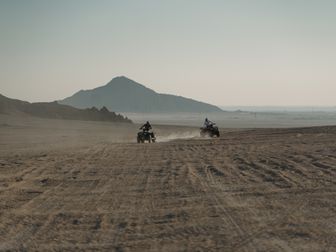
The signature terrain is deep red sand, especially in the dunes and open play sections around Sand Mountain. In these areas, traction changes constantly. One line may feel packed and easy, while the next patch becomes loose and power-sapping. On an ATV, that means throttle control matters. Riders who are used to hardpack often underestimate how quickly deep sand can bog down a machine, especially on climbs.
The second major surface type is slickrock and sandstone shelves. Unlike mountain trails with roots and mud, Sand Hollow’s rock sections are dry, grippy, and ledgy. Grip can feel excellent in dry conditions, but the terrain is still technical because of abrupt step-ups, off-camber sections, and narrow line choices. Some routes transition quickly from sand wash to rock slab, so suspension setup and tire pressure can make a big difference.
You will also encounter:
- Desert hardpack connectors between major riding zones
- Sand washes that can range from smooth and flowing to chopped up and rutted
- Rock ledges on more advanced routes
- Steep dune climbs and descents with blind crests
- Loose hill approaches where momentum matters
- Exposure to sun and wind with very limited natural shade
This is not a creek-crossing trail system. Water obstacles are generally not the defining challenge here. The bigger issue is heat, dehydration, and mechanical strain from sand riding. In summer, temperatures can become extreme by late morning. Engines run hotter, belts work harder on UTVs, and riders tire faster than they expect.
After storms, some sections can firm up and become easier to read, but washes may also change shape. Wind can erase tracks quickly in open sand, making navigation harder if you rely only on following previous tire marks. In the more technical areas, sandstone edges can be sharp enough to punish poor tire placement, even though the region is better known for grip than for mud or slick clay.
Difficulty & Who It's For
One of the best things about Sand Hollow is that it works for a wide range of riders, but only if they stay honest about route choice.
Green
Best for: beginners, families, newer ATV riders, and visitors who want scenic riding without technical obstacles.
Green-level terrain at Sand Hollow includes easier sand flats, broad open areas where you can practice turning and throttle control, and simpler connector routes with minimal ledges. These sections are good for riders learning how an ATV handles in soft sand. We recommend Green terrain for first-time visitors who want to get comfortable before exploring steeper dunes or rock.
Blue
Best for: confident beginners and intermediate riders.
Blue routes usually include moderate dune climbs, mixed sand and rock surfaces, mild ledges, and more route-finding. This is the sweet spot for many ATV riders at Sand Hollow. You get the signature scenery and terrain variety without committing to the most technical obstacles. If you have basic sand experience and can handle changing traction, Blue terrain is where most of your day will likely happen.
Black
Best for: experienced riders with strong machine control.
Black-level riding here can mean steep climbs, off-camber slickrock, larger ledges, deeper sand approaches, and technical line selection. These routes are less forgiving if you lose momentum or choose the wrong angle. Heat and exposure also amplify the difficulty. A line that would feel moderate in cool weather can feel much harder after several hours in the sun.
Double-Black
Best for: advanced riders only.
Double-Black terrain around the broader Sand Hollow/Hurricane system includes serious rock obstacles, abrupt breakovers, steep descents, and highly technical features more often associated with built UTVs and rock crawlers. ATV riders can enjoy some of this terrain, but it is not where most visitors should start. We recommend treating Double-Black routes as specialist riding, not sightseeing detours.
Permits & Access
Access rules at Sand Hollow can confuse first-time visitors because the riding area overlaps state park access and the broader OHV system.
Parking and staging
Common staging areas include access points near Sand Hollow State Park and trailhead areas serving the Sand Mountain OHV zone. Riders towing ATVs will usually find the easiest logistics by staging where trailer parking is clearly marked and where your intended route starts close by. During busy weekends, especially in spring and holiday periods, parking fills early.
Permit costs and park fees
If you enter through Sand Hollow State Park, expect to pay a Utah state park day-use fee. These fees can change, but a standard day-use vehicle entry is typically in the $15-$25 range depending on vehicle type and current state pricing.
OHV sticker requirements
Utah requires off-highway vehicles to be properly registered.
- Utah residents: need current Utah OHV registration where applicable.
- Nonresidents: generally need a Utah nonresident OHV permit if their machine is not street legal in Utah under current reciprocity rules.
Nonresident OHV permit pricing changes periodically, but riders should expect a cost in the general range of about $30 for a permit period. Always verify current rates with Utah State Parks OHV before travel.
Reservations
You usually do not need a trail reservation just to ride the OHV system. However, if you plan to camp inside Sand Hollow State Park, campground reservations are often recommended well in advance during peak season.
What to verify before you go
We recommend checking:
- Current Utah OHV registration/nonresident permit rules
- Current Sand Hollow State Park entry fees
- Any temporary closures or event restrictions
- Fire restrictions and camping rules if you are staying overnight
Tips for Riding This System
- Start early, especially from late spring through early fall. Sand Hollow heat is the biggest hazard for many riders. Morning rides are safer, cooler, and easier on both rider and machine.
- Air down carefully for sand, but remember you may also hit rock. Lower tire pressure helps flotation in dunes, but don’t go so low that you risk poor handling or wheel damage when transitioning onto slickrock.
- Ride blind dune crests with caution. Sand Hollow has open terrain, and another rider or UTV may be on the other side of a hill. Approach crests under control.
- Carry more water than you think you need. The dry heat can sneak up on visitors. We recommend every rider carry personal hydration, not just group water in a cooler at camp.
- Use GPS or downloaded maps instead of following tracks alone. Wind and traffic can make routes look different throughout the day, and open riding zones are easy to misread if you are new to the area.
- Keep momentum in deep sand, but don’t charge into technical rock. Sand rewards smooth throttle and flow; rock rewards precision. Sand Hollow demands both skills, often within the same mile.
- Check your air filter after dusty rides. Fine sand and desert dust can load filters quickly, especially if you spend the day in groups or behind other machines.
FAQ
Do you need a permit to ride Sand Hollow ATV trails?
Yes. Most ATV riders need valid Utah OHV registration or a Utah nonresident OHV permit, depending on residency and machine status. If you access through Sand Hollow State Park, you should also expect a park entry fee.
Are Sand Hollow trails good for beginners?
Yes, parts of the system are beginner-friendly. Open sand flats and easier connector routes work well for newer riders, but beginners should avoid steep dune faces and technical rock sections until they build confidence.
What is the best time of year to ride Sand Hollow?
Fall, winter, and spring are the best seasons. Summer can bring extreme desert heat, making afternoon riding uncomfortable and potentially dangerous.
Is Sand Hollow better for ATVs or UTVs?
It works well for both. UTVs are extremely popular here, especially on larger rock routes and open sand, but ATVs do very well because they are nimble on mixed terrain and easier to place on tighter technical lines.
Sand Hollow is one of those rare riding destinations that feels both approachable and huge. A beginner can have fun here without seeing the hardest terrain, while an experienced rider can spend days exploring more technical lines across sand and slickrock. If you plan around the heat, carry proper hydration, and choose routes that match your skill level, this southern Utah system delivers some of the most memorable desert riding in the region.
Get our best guides in your inbox
Top Picks & Comparison
| # | Product | Price | Rating | ||
|---|---|---|---|---|---|
| #1 | ![EFX Sand Slinger Paddle Rear (4ply) ATV Tire [29x14-14]](https://m.media-amazon.com/images/I/514UqcS6pML.jpg) |
EFX Sand Slinger Paddle Rear (4ply) ATV Tire [29x14-14] |
$255.60 | (1) | Check Price on Amazon → |
| #2 |  |
20 x 11-10 Ocelot Sand Snake 8 Paddle Rear Tire |
$60.97 | (9) | Check Price on Amazon → |
| #3 |  |
Sedona CY20119L Cyclone Sand Paddle Rear Tire - Left - 20x11-9 |
$114.64 | (44) | Check Price on Amazon → |
| #4 | ![Pair of Pro Armor Sand Paddle Rear (4ply) ATV Tires [32x15-15] (2)](https://m.media-amazon.com/images/I/41MKCBo7KjL.jpg) |
Pair of Pro Armor Sand Paddle Rear (4ply) ATV Tires [32x15-15] (2) |
$395.90 | (10) | Check Price on Amazon → |
| #5 |  |
Tusk Sand Lite Front & Rear UTV Tire Set – 32x10-15 Ribbed Front & 32x12-15 15-Paddle Rear – Off-Road Sand Tires |
$647.94 | (3) | Check Price on Amazon → |